

 In an era where digital convenience seamlessly intertwines with privacy concerns, a groundbreaking investigation by Cybernews has revealed the extent to which airline applications may be silently navigating beyond the skies—into travellers’ personal devices and lives. This inquiry, covering 14 of the most frequented airline apps, unfolds a narrative of technological utility and sensitive access that may know more about you than you do.
At the heart of this exploration lies the probing question: What data can airline apps claim to collect, and at what cost to user privacy? American Airlines and United Airlines emerge at the forefront of this digital expedition, gathering the most substantial swathes of data. Philippine Airlines treads more lightly; its digital footprint is far less pronounced.
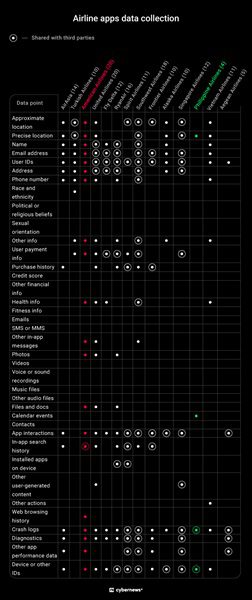
Airline apps data collection.
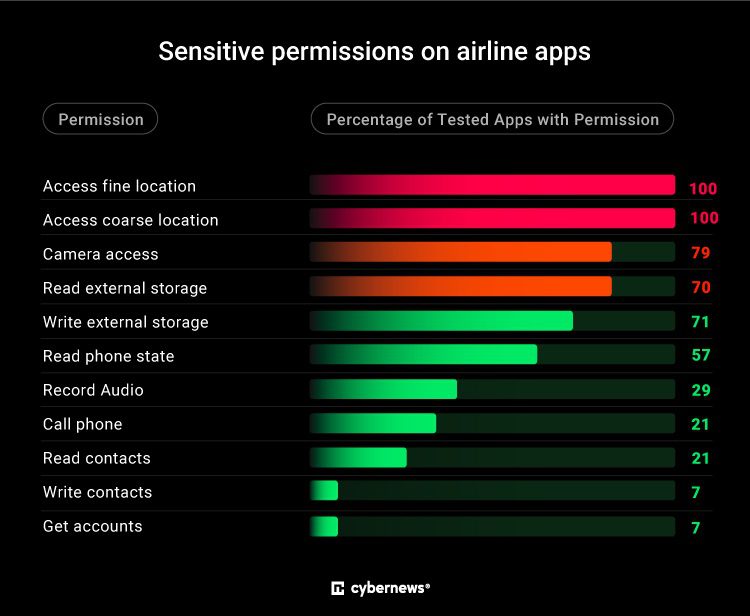
The investigation meticulously tested these apps for sensitive Android permissions, scrutinizing the potential for these digital companions to access user location, camera, storage, phone state, microphone, contacts, accounts on the device, messages, and calls. The findings reveal a troubling gap between the permissions granted and the transparency offered on platforms like Google Playstore, where not all apps disclose the data points they can collect.
One universal truth uncovered is every travel app’s access to your location is justified mainly by app functionality, personalization, and marketing motives. Yet, not all airlines are forthcoming about this collection, leaving passengers unknowingly on the radar. Exceptionally, RyanAir, FlyDelta, and Aegean hover under the radar, not disclosing their tracking practices.
The lens then shifts to the camera permissions, where only three out of 14 airlines acknowledge collecting camera-related data as part of app functionality and security measures. The silence from the remaining airlines raises questions about the unseen eyes potentially peering through the digital veil.
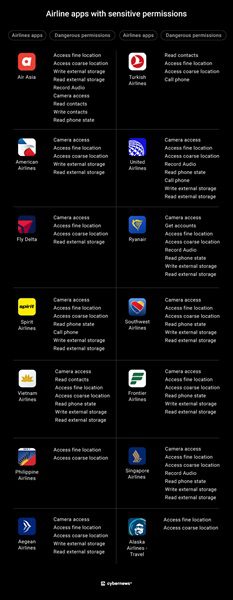
Tested airline apps with sensitive permissions list.
Storage access further complicates the narrative, with only a fraction of airlines admitting to collecting data related to files—essential for app functionality, analytics, and security, they say. Yet, the silence from the majority leaves a void filled with speculation about what might be accessed, stored, or potentially exploited.
The permission to read phone state information uncovers another layer of sensitivity, granting apps access to data that can identify the device and user yet shrouded in non-disclosure by the airlines. Similarly, microphone access—found in four airline apps—flies under the radar without the carriers’ acknowledgment.
Intriguingly, while airlines may not necessitate access to user contacts for trip accommodations, three apps breach this boundary without transparent disclosure. This invasion of personal connections adds a layer of concern for privacy advocates.
The capability of airline apps like Ryanair to access account data on devices paints a broader picture of the potential for privacy and security risks, raising the question of necessity versus intrusion.
Perhaps most startling is the discovery that some airlines could, with the permissions granted, call or send messages on behalf of the user—a power far beyond the expected functionality of a travel companion app and into the realm of potential misuse.
This investigation not only unveils the digital reach of airline apps but also ignites a conversation about the balance between convenience and privacy. As we navigate through the digital skies, the importance of informed consent and transparency becomes ever more paramount, highlighting the need to reevaluate what data is essential for the journey.
Written by: Yves Thomas











