
As Christmas travel reaches its annual crescendo, airports humming, suitcases rolling, and hotel rooms turning over at speed, an unwelcome stowaway has once again muscled its way into the headlines: the bed bug.
Recent coverage by Reuters, Daily Mail, and The Mirror has warned of heightened bedbug activity across the United Kingdom during the festive travel rush. Yet beneath the alarmist headlines sits a more sobering truth for the global hotel industry, one it has quietly grappled with for years.
Bed bugs, experts are at pains to remind us, are not a hygiene problem. They are a mobility problem. They travel with people—business travellers, holidaymakers, families heading home for Christmas dinners and even the most polished, well-run hotels are vulnerable during periods of high guest turnover.
That reality is forcing a long-overdue rethink in how hotels manage guest safety.
“Bed bugs travel with people all the way to their homes, and the hotels that are winning today are the ones that have understood that,” says Martim Gois, co-founder and chief executive of Valpas. “Instead of reacting after the fact, leading hotels are now guaranteeing guest safety upfront and extending care beyond the stay itself.”
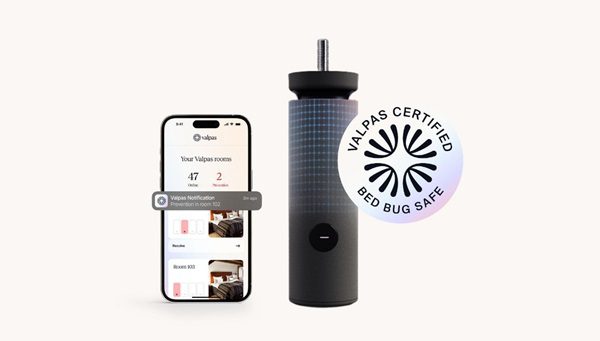
Certified bed bug safety becomes hotels’ competitive advantage this Christmas.
Historically, the industry’s response has been reactive. A guest complains, a room closes, and emergency treatments follow, often involving repeated chemical sprays or heat treatments that disrupt operations and dent reputations. During peak periods like Christmas, that cycle becomes both costly and operationally fraught.
Compounding the problem is rising scrutiny of pesticide use indoors. International incidents reported this year, including cases in Turkey, have heightened concerns about health risks and sustainability failures associated with emergency chemical treatments in hotel settings.
The result is a noticeable shift toward prevention rather than cure.
An increasing number of hotels are now adopting certified bed bug-safe stays, an approach that offers permanent, room-level protection without indoor pesticides. Rather than scrambling after an incident, these properties guarantee that bed bugs are stopped at first contact, removing the need for repeated emergency interventions altogether.
Valpas has emerged as a bellwether in this transition. Its bed bug-safe certification is now used by more than 300 hotels across 70 destinations worldwide. Certified rooms are fitted with discreet, connected smart bed legs that block bed bugs on contact and provide continuous digital confirmation that protection remains intact.
For hotel operators, the appeal is twofold: fewer disruptions and a clear, visible safety promise. For guests, it offers something increasingly valuable during busy travel periods: confidence.
“This is no longer about fixing problems,” Gois says. “It’s about leadership. Certified bed bug-safe hotels are setting a new global standard by refusing avoidable risks, toxic compromises and outdated practices.”
As Christmas travel continues and public attention remains firmly fixed on safety and sustainability, industry observers expect certified bedbug-safe hotels to become a defining benchmark, much like food hygiene ratings or environmental certifications once did.
In an era where trust is currency, the message is clear: the hotels that protect guests not just during their stay, but on the journey home, are the ones setting the pace for modern hospitality.
by Octavia Koo – (c) 2025
Read Time: 4 minutes.
About the Writer
 Indonesian-born Octavia Koo arrived in Australia in the early 1980s, drawn by the creative promise of Sydney and a place at UNSW, where she studied Arts and soon discovered her flair for visual storytelling. She began as a graphic designer, quickly turning her sharp eye for detail towards the digital frontier, designing websites and crafting polished descriptions that draw people in—and keep them reading.
Her next chapter took her to Singapore, where she built and managed blogs for several tourism platforms, uncovering a natural gift for SEO long before the term became fashionable. There, amid the buzz of ITB Asia, she met Stephen, who suggested she consider Global Travel Media. A few years later, she did just that.
Now part of GTM’s editorial family, Octavia brings a quiet brilliance to her work. She merges art, technology, and intuition to tell travel stories that charm and perform, much like their author.