
Malawi has never been loud about selling itself.
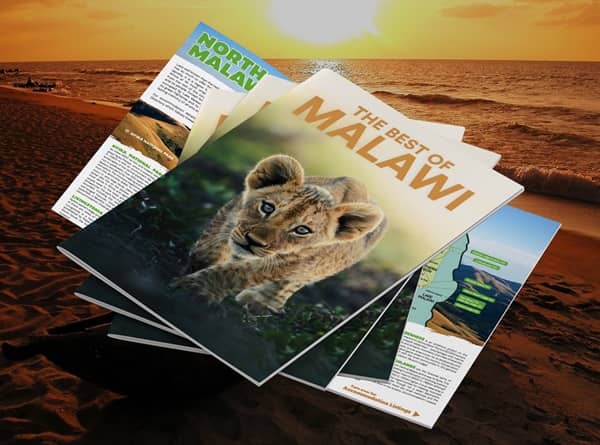
Tucked neatly between better-known African heavyweights, the country has long relied on something simpler than spectacle: quiet confidence, deep civility and landscapes that do not need enhancement. Now, with international travel firmly back on its feet, Malawi is making a polite but deliberate re-introduction to the global tourism market with the release of its Best of Malawi 2026 travel guide.
The new edition, published by the Malawi Travel Marketing Consortium, is available in digital format as both an online flipbook and a high-resolution downloadable PDF, alongside a limited print run targeting UK-based travellers and European travel events. It is not a glossy sales pitch in the modern influencer sense. It is, rather, a traditional, directory-style guide in the old travel-trade tradition: practical, comprehensive and commercially purposeful.
For a nation whose visitor economy has matured quietly rather than explosively, the timing is deliberate. After several years of disrupted global movement, Malawi’s tourism sector is again recording steady international demand, particularly from long-haul markets seeking low-density, conservation-led destinations.
The Best of Malawi guide has become, over time, the country’s principal tourism reference point. It brings together accommodation providers, safari operators, transport companies and regional travel services into a single, verifiable resource. For travellers accustomed to fragmented online research and romanticised algorithm-driven itineraries, its value is refreshingly old-fashioned: it tells you who operates where, what they do, and how to find them.
Behind the publication sits a consortium of more than 40 Malawian tourism businesses, ranging from lodge operators to transport specialists. Collectively, they form a broad cross-section of the nation’s visitor economy and, in many respects, function as its international shopfront.
What the guide captures most effectively, however, is not simply logistics; it is Malawi’s quiet transformation as a safari and conservation destination.
Over the past decade, Malawi’s national parks and wildlife reserves have undergone one of southern Africa’s least publicised rehabilitation efforts. Through coordinated conservation programs, translocations and local community partnerships, wildlife populations that were once under threat have rebounded. Today, elephants once again roam in healthy numbers. Predators have returned to several reserves. Birdlife, already a national strength, continues to flourish.
This conservation recovery now underpins a safari offering that, while modest in scale, is increasingly credible alongside more established African circuits without the congestion or price inflation that often follow high-profile success.
Then there is Lake Malawi, the country’s unmissable geographical constant. The great inland sea still defies most first-time visitors with its clarity, breadth and calm. It remains one of the world’s most biologically diverse freshwater ecosystems and continues to anchor Malawi’s appeal beyond wildlife tourism alone. Beachside lodges, village fishing cultures and freshwater diving combine in ways that feel almost anachronistic to modern mass tourism, and that is precisely the attraction.
The 2026 guide lays this offering out with restraint. Its structure moves from national overview into regional breakdowns, north, central and south Malawi, before cataloguing accommodation, tour and transport services. Activity sections detail safaris, watersports, cultural experiences and overland touring routes, while a practical travel advisory addresses visas, safety, health and local logistics.
For the trade, its importance is both commercial and inspirational. Malawi does not command the marketing budgets of its neighbours. Instead, it invests in reliability, transparency and product integrity, all qualities that travel agents, independent travellers and tour wholesalers quietly prioritise.
There is also a broader economic undertone to the guide’s release. Tourism remains one of the country’s most scalable sources of foreign revenue. Each incremental visitor supports employment not just in lodges, but across transport, agriculture, crafts, maintenance and local supply chains. In that sense, the Best of Malawi 2026 guide is not simply a travel publication; it is a small piece of commercial infrastructure.
For Australian travellers, Malawi continues to sit outside the usual African itinerary. Yet that is slowly shifting as demand edges away from overtourism and towards destinations that still operate at a human pace. Malawi rewards patience rather than spectacle. It trades efficiency for sincerity. And it remains, in a world increasingly curated by algorithms, stubbornly real.
The new guide does not pretend otherwise. It simply lays the country out as it is quietly confident, conservatively ambitious and ready, once again, to welcome those prepared to look beyond the obvious.
And in the end, that may be its greatest commercial strength of all.
by Alison Jenkins – (c) 2025
Read Time: 4 minutes.
About the Writer
 Alison Jenkins has spent much of her career at thirty thousand feet or at least close to it. Having worked in several sales roles with several airlines, she built a reputation for knowing her clients and flight schedules. Quick with a smile and sharper still with a deal, she became one of those rare people who could charm passengers and partners without losing her professional edge.
Trade shows and FAMILS were all part of the territory, and Alison became a regular on the circuit, with suitcases, smiles, and a notepad never far from reach. Somewhere between airport lounges and hotel lobbies, she discovered she loved telling the stories behind the journeys. Her post-FAMILS reports, meant for internal newsletters, began to take on a life of their own, lively, observant, and unmistakably hers.
That’s when Alison realised she wasn’t just selling travel, she was meant to write about it.