
In the global arms race for travellers, it is no longer enough to offer turquoise water, ancient temples and polite service. Tourism has become a technology contest, and Indonesia has now stepped squarely into it.
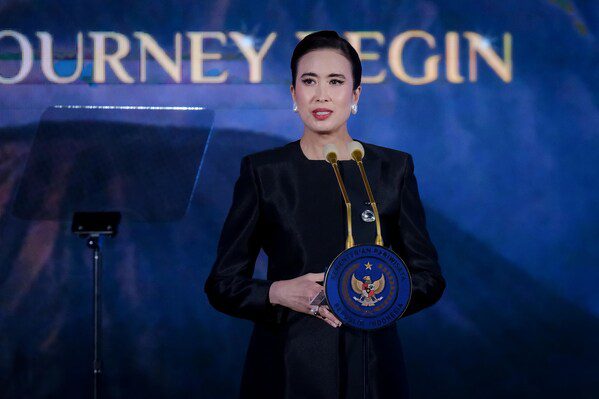
On Friday in Jakarta, Tourism Minister Widiyanti Putri Wardhana unveiled MaiA, an artificial intelligence platform designed specifically for the tourism sector and positioned as the digital centrepiece of the country’s Tourism 5.0 strategy. The launch, held at the Sapta Pesona Building, was part tech showcase, part policy statement: Indonesia intends to compete not only on beauty, but on brains.
MaiA — short for Meticulous Artificial Intelligence of Indonesia now sits inside the government’s official tourism portal, indonesia.travel, where it is being promoted as a digital travel companion for both domestic and international visitors. In practical terms, it is meant to help tourists work out where to go, how to get there and what to do once they arrive, using personalised recommendations, automated itinerary building, interactive maps and multilingual destination summaries.
For Minister Widiyanti, the symbolism matters as much as the software.
“The launch of MaiA is the actual implementation of the government’s commitment to establishing a smart, inclusive, and sustainable tourism ecosystem,” she told the audience under the banner Transforming Travel Beyond Ordinary Through Intelligence.
There is nothing abstract about what Indonesia is trying to do here. Tourism is one of the country’s most valuable economic engines, supporting millions of jobs and feeding foreign exchange into a sprawling archipelago of provinces that depend on visitor spending. But the rules of the game have changed. Today’s travellers arrive armed with smartphones, time pressure and high expectations. They want effortless planning, instant answers and experiences shaped around their personal interests.
That behavioural shift is precisely what MaiA is built to address.
Instead of static brochures and generic destination lists, the system adapts to individual preferences, proposing everything from nature-based adventures and cultural trails to culinary tourism and eco-conscious travel. It is designed to provide reassurance as much as inspiration, a digital guide that follows travellers from the planning stage through to on-the-ground exploration.
“This is our step toward shaping tourism that is not only beautiful to behold, but also intelligent and inclusive for all,” Minister Widiyanti said.
Behind the language of inclusivity sits a sharper economic imperative. Across Asia, governments are investing heavily in innovative tourism platforms as they chase a finite pool of high-value travellers. From South Korea to the Gulf states, artificial intelligence has become tourism infrastructure. Indonesia, long rich in natural assets but slower to digitise its visitor economy, is now moving decisively to close that gap.
MaiA is also closely aligned with Indonesia’s sustainability agenda, a necessary political balancing act as visitor numbers rebound. Over-tourism has placed pressure on several of the country’s most celebrated destinations in recent years. By steering travellers toward lesser-known regions and distributing demand more evenly, the government hopes the platform can serve as a soft regulator of visitor flows rather than merely a marketing tool.
For the Ministry of Tourism, the project is also about global positioning.
“Let us welcome MaiA as a step forward toward a more adaptive, competitive, and world-class future for Indonesian tourism,” the Minister said.
The message is pitched outward as much as inward: Indonesia wants to be seen not just as a cultural heavyweight, but as a digitally serious destination capable of meeting modern traveller expectations.
The audience at Friday’s launch underlined that ambition. Government officials, tourism associations, industry partners and international media were all present, signalling that MaiA is intended to operate on a global stage rather than as a domestic curiosity.
Whether travellers adopt it in meaningful numbers will be the true test. Artificial intelligence platforms are only as good as the trust they earn and the accuracy they deliver. But if MaiA does what it promises, simplifying decisions, reducing friction and opening up new corners of the archipelago, it could quietly reshape how visitors move through one of the world’s most complex tourism markets.
In an industry increasingly driven by algorithms rather than glossy brochures, Indonesia has made its bet. The beaches and temples remain. Now there is code behind them.
By Octavia Koo – (c) 2025
Read Time: 3 minutes
About the Writer
 Indonesian-born Octavia Koo arrived in Australia in the early 1980s, drawn by the creative promise of Sydney and a place at UNSW, where she studied Arts and soon discovered her flair for visual storytelling. She began as a graphic designer, quickly turning her sharp eye for detail towards the digital frontier, designing websites and crafting polished descriptions that draw people in—and keep them reading.
Her next chapter took her to Singapore, where she built and managed blogs for several tourism platforms, uncovering a natural gift for SEO long before the term became fashionable. There, amid the buzz of ITB Asia, she met Stephen, who suggested she consider Global Travel Media. A few years later, she did just that.
Now part of GTM’s editorial family, Octavia brings a quiet brilliance to her work. She merges art, technology, and intuition to tell travel stories that charm and perform, much like their author.