
On a Tuesday morning at Sydney Airport’s international terminal, the old rhythms are quietly changing. The queues are back. The roll-aboards are back. So is the low thrum of anticipation that only a departure hall carries. But listen closely to the conversations drifting across the check-in desks and café tables, and something else is happening too: people are travelling differently.
They are not flying simply to get somewhere. They are flying to be someone.
That subtle yet structural shift sits at the heart of a global study released this week by Global Hotel Alliance (GHA), the world’s largest alliance of independent hotel brands. Drawing on behavioural data from more than 32 million loyalty members worldwide, the research sketches a picture of travel in 2026 that feels less like a rebound and more like a reset.
It reveals a traveller who is less hurried, less transactional and far more intentional. Work trip is no longer king. Speed is no longer sacred. Even luxury has changed its stripes. For Australia’s $166-billion visitor economy, the implications are commercial as much as cultural.
From Status to Self-Expression
One of the study’s quietest findings is also one of its most disruptive: 65 per cent of travellers now say that travel expresses who they are. Among younger travellers, the shift is sharper. Half of Gen Z respondents ranked travel as more important than traditional career milestones.
In business terms, this represents a profound reordering of value. Travel is no longer just consumption. It is personal branding.
It also alters how destinations must sell themselves. The traditional promise of “escape” is now being replaced by a more complex pitch: identity, belonging and alignment with personal values. The strongest expression of this shift appears across Germany, the United States, Thailand, the UAE and India, where destinations are now chosen almost as carefully as education or profession.
For Australian operators pitching into those markets, the message is blunt: generic experiences will increasingly be ignored.
Leisure, Not Labour, Now Drives Demand

For decades, business travel quietly underwrote the long-haul aviation model. That economic ballast is weakening.
By 2026, travellers expect to take an average of six leisure trips a year, compared with four for business. Nearly half expect to travel more for personal reasons, while only a small minority plan to increase work travel.
The generational split is stark. Younger travellers are accelerating their travel habits. Older travellers are slowing them down—fewer trips, longer stays, greater emphasis on restoration rather than accumulation.
For Australian airlines and premium accommodation providers, this shift matters deeply. Leisure travellers book differently, stay longer, travel seasonally and make decisions emotionally rather than contractually. The yield profile is changing.
It also means the future of aviation growth looks increasingly discretionary and therefore more sensitive to the economic mood.
The End of Repeat Tourism
Another long-standing assumption is also being quietly dismantled: that travellers want to go back to the same place again and again.
According to GHA, 62 per cent prefer discovering new destinations rather than returning to old favourites. Even among those who do return, the motivation has changed. It is no longer about familiarity but about deeper experience—staying longer, travelling further inland, or avoiding the headline attractions altogether.
The hunger for novelty is strongest among travellers from India, China and the UAE, markets that will increasingly shape global demand across this decade. Safety and comfort still dominate decision-making, but cultural curiosity now runs a close second. For Gen Z, it sits at the very top.
Australia, long reliant on the loyalty of repeat international visitors, may need to adapt its marketing strategies accordingly.
Slower, Smaller, Quieter
Perhaps the most striking cultural development in the GHA data is the retreat from speed.
Nearly 60 per cent of travellers prefer small cities and rural destinations over large urban centres. The exception is China, where global gateway cities still dominate aspirations. In most Western and Southeast Asian markets, the trend is in the opposite direction: fewer landmarks, more unstructured time.
Unplanned, restful trips now outpoll tightly scheduled sightseeing itineraries. In Malaysia and the UK, the preference for slow travel is dominant. In China and the United States, the tempo remains faster, but the gap is narrowing.
For regional Australia, this represents one of the clearest growth signals of the next decade if infrastructure, staffing and access can keep pace.
Luxury Grows Selective
Travellers are not becoming cheaper. They are becoming more precise.
Almost four in five respondents plan to spend on meaningful quality upgrades rather than indulge in open-ended splurging. Value now competes directly with status. Germany remains an outlier with a higher tolerance for free-spending luxury. Across the Asia-Pacific, spending is increasingly conscious.
What has not changed is the anchor of luxury: hotel quality remains non-negotiable for 86 per cent of travellers.
Five-star ratings still matter, but their meaning has evolved. Guests now associate luxury as much with personalised service, flexibility and high-quality food as with chandeliers and thread counts.
For Australia’s premium tourism sector—already grappling with staffing constraints—this intensifies the pressure on service excellence.
From Points to Belonging
Loyalty programs, once a simple arithmetic of points and redemptions, are undergoing a philosophical shift.
The benefits now most valued by travellers are not free flights but room upgrades, flexible check-in and recognition. More than 70 per cent say they would consider paying for a subscription-style travel loyalty product that offers year-round lifestyle benefits rather than transactional rewards.
Time savings, status recognition and exclusive access have become the real currency of loyalty.
This reframes the commercial role of loyalty programs from a cost centre to a long-term relationship platform.
AI Becomes Everyday Travel Infrastructure
Technology, once a novelty in travel planning, is now embedded.
Six in ten travellers have already used AI tools such as ChatGPT or Google Gemini to assist with trip planning. Among Gen Z, usage jumps to nearly eight in ten. Adoption is highest across China, Thailand and Singapore.
The expectation of contactless payments, digital hotel keys, and biometric boarding is rapidly becoming the norm. Almost half of travellers now prefer to book directly through hotel brand apps rather than third-party platforms, an essential shift in distribution power.
For operators, the challenge is no longer whether to invest in digital infrastructure, but how fast to scale it without diluting service.
Asia Tightens Its Grip on the World’s Imagination
If there is one geographical truth running through the GHA study, it is this: Asia dominates global travel ambition.
Japan is now the most desired destination in the world, leading wish-lists across Australia and much of Southeast Asia. China and Thailand follow closely behind. Together, the region accounts for nearly one-third of global “dream trips” for 2026.
The centre of gravity in global tourism has shifted decisively east.
Just as revealing is how travellers are being inspired. While friends and family remain the most trusted source, Instagram now rivals traditional media as the dominant influence, with YouTube and TikTok shaping decision-making in key Asian markets.
The tourism cycle is no longer linear. It is social, visual and almost instantaneous.
What This Means for Australian Tourism
For Australia, the significance of these findings extends well beyond marketing strategy.
They affect air route economics, regional development, hospitality staffing, digital investment and pricing strategy. They also suggest that Australia’s traditional status as a “once-in-a-lifetime” destination may face new pressure in a world where novelty has become a primary motivator.
At the same time, the shift toward slower, regional and experience-driven travel aligns precisely with Australia’s long-term positioning. The opportunity exists. The execution will decide whether it is captured.
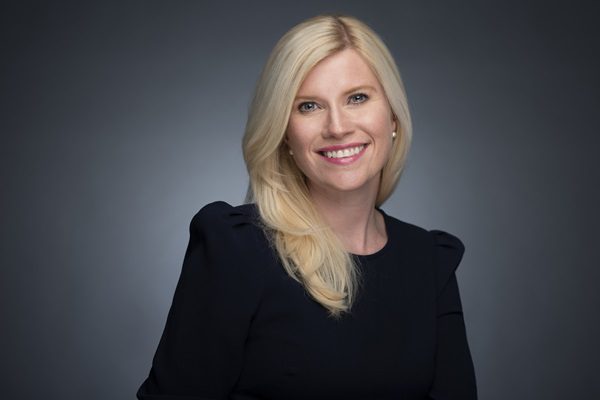
Summing up the human logic behind the numbers, Kristi Gole, GHA’s Executive Vice President of Strategy, puts it:
“They are travelling less for work, more for meaning, and choosing experiences that reflect who they are. What’s particularly exciting is how loyalty has evolved; for our members, it’s about lifestyle, recognition and belonging wherever they go.”
That sense of belonging, to a place, a brand, a rhythm of travel—may be the defining commercial currency of the next decade.
And that, more than algorithms or aircraft orders, will ultimately decide who wins the next chapter of global tourism.