
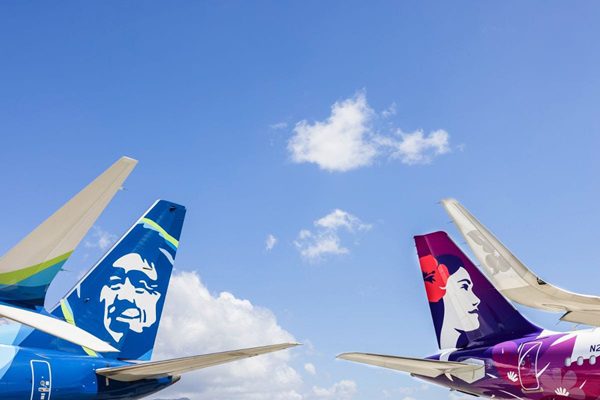
When two proud islanders, one from the Pacific’s frozen north and the other from its sun-kissed middle, decide to share the same sky, it will raise a few eyebrows at 30,000 feet.
This week, Alaska Airlines and Hawaiian Airlines quietly notched a milestone to which even seasoned aviation hands tip their caps: the Federal Aviation Administration’s single operating certificate (SOC). In layman’s terms, it’s bureaucratic poetry in motion—a green light allowing both carriers to operate under one regulatory umbrella while keeping their distinct personalities intact.
“Congratulations to everyone at Alaska Airlines and Hawaiian Airlines for getting us to a single operating certificate,” said Ben Minicucci, President and CEO of Alaska Air Group. “This was a year-long, multi-phase effort involving multiple departments and thousands of hours of work. We also appreciate the FAA and the U.S. Department of Transportation for their guidance and support as we carefully reviewed and harmonised our processes with a shared focus on safety. This is an important step in our journey as a combined organisation, and I’m excited about our future together.”
A tale of two brands – and one call sign
Underneath the gloss of this technical triumph lies a story about how two very different carriers are learning to dance in sync. The pair will now share the same operational call sign – “AS” – used by pilots and dispatchers when chatting with air traffic control.
However, for passengers, the romance of both brands will remain untouched. Alaska’s clean, northern efficiency will still meet Hawaiian’s trademark ho‘okipa hospitality. What may change is your flight number, as duplicated digits are reissued across the network, a minor hiccup for frequent flyers who have their favourite flights memorised.
Travellers can expect their familiar logos to stay put for now: Alaska’s smiling Eskimo tail and Hawaiian’s radiant Pualani will keep their rightful places on the tarmac.
Leadership lands in Honolulu
A serious operational ballet is underway behind the friendly service and scenic routes. With the SOC granted, several Honolulu-based leadership roles officially take effect to support the combined organisation’s operations to, from, and within Hawai‘i.
At the helm, Diana Birkett Rakow, Alaska’s Executive Vice President of Public Affairs and Sustainability, takes over as CEO of Hawaiian Airlines, succeeding Joe Sprague, who retires after a long and distinguished career with the Alaska Air Group.
Meanwhile, Jim Landers, formerly Hawaiian’s Senior Vice President for Technical Operations, becomes Head of Hawai‘i Operations. Previously, Horizon Air’s Vice President of Station Operations and Inflight, Shelly Parker, now steers Guest Operations across the islands.
The technology flight path ahead
For those who like their aviation updates sprinkled with tech jargon, the next phase involves a Passenger Service System (PSS), essentially the digital heartbeat that powers ticketing, bookings, and check-in systems.
Both airlines expect to migrate onto a single platform by April next year. From then on, all flights will display the AS code, yet travellers will still see Hawaiian Airlines branding, ensuring the carrier’s identity and aloha spirit remain prominent across digital channels.
It’s the kind of modernisation that streamlines systems without flattening their character, something both airlines are keen to protect.
More than a merger – a marriage of cultures
Industry observers note that merging two carriers isn’t merely about logistics; it’s about blending cultures, something many airline unions have failed to master. Alaska’s practical northern heritage and Hawaiian’s laid-back warmth make for a surprisingly complementary pairing.
The FAA’s single certificate represents more than compliance; it signals shared trust, combined safety protocols and aligned staff training that meet the gold standard of U.S. aviation.
For passengers, that translates to smoother connections across the Pacific and a loyalty program, Atmos™ Rewards, that extends perks across the network. For employees, it’s a signal that the integration is real, with unified manuals, maintenance standards and operating policies taking flight.
Final descent
As Alaska and Hawaiian Airlines prepare for the next leg of their journey together, the message is clear: aloha and akutaq (that’s “ice cream” in Yup’ik) can indeed coexist.
Both carriers will remain true to their roots, Alaska’s pioneering reliability and Hawaiian’s island hospitality, while charting a shared future in one of the world’s most competitive aviation markets.
With the SOC, their combined story isn’t about one brand swallowing another. It’s about two-storied airlines, bound by professionalism and passion, learning to share the same wingspan.
By Prae Lee – (c) 2025
Read Time: 3 minutes
About the Writer
 You can tell a lot about a person by how they handle a busy Bangkok morning. Prae Lee doesn’t rush; she glides through it. There’s a calm certainty about her, the sort that comes from knowing where you come from and where you’re going.
Educated at Chulalongkorn University, she took her business degree with the quiet pride of someone who believes in doing things correctly. Her travels for further study in Singapore and Australia didn’t change her; they polished what was already there: curiosity, discipline, and grace.
She returned to her family business in Bangkok, breathing a little modern life into it. She handled social media with the intuition of someone who listens and sells with the gentle persistence the Thais do so well.
Prae doesn’t make a fuss, but everything she touches shines brighter.
Now part of the Global Travel Media family, Prae brings authenticity and quiet confidence to her writing, drawing from a life steeped in culture, travel, and connection.