
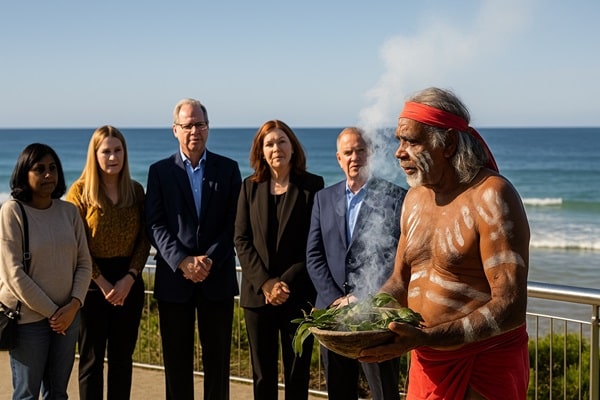
This week, a small but significant ripple spread through Australia’s tourism ranks in Perth. The Australian Tourism Export Council (ATEC), a body more accustomed to talking room rates than reconciliation, quietly launched its first Reflect Reconciliation Action Plan to bring cultural respect from the margins to the centre of the visitor economy.
It wasn’t a ribbon-cutting moment with fanfare and speeches. It was a steadier nod to doing things the right way and perhaps, at long last, acknowledging that the story of Australian tourism began well before Captain Cook dropped anchor.
A Plan With Purpose
The Plan, endorsed by Reconciliation Australia, gives ATEC a practical framework for building relationships, fostering respect, and creating opportunities with Aboriginal and Torres Strait Islander peoples.
Managing Director Peter Shelley spoke with characteristic plainness, optimism, and part accountability.
“Australia’s tourism story begins with one of the world’s oldest living cultures, and our Reconciliation Action Plan reflects our commitment to embedding that truth into the heart of our industry,” he said.
He wasn’t trotting out corporate platitudes. Shelley knows that the industry’s credibility rests on authenticity, and authenticity starts with listening.
“Tourism is a powerful connector which allows us to share culture, build understanding, and create economic opportunities that strengthen communities and this Plan will help ATEC and its members ensure that First Nations voices are recognised, respected, and celebrated.”
From Words to Work
So, what does that mean in practice?
The Reflect RAP sets out a handful of real tasks: linking ATEC members with Aboriginal and Torres Strait Islander tourism businesses; opening employment and procurement pathways; and embedding cultural learning across the organisation.
It’s nothing revolutionary, but in tourism, change often arrives not with a bang but with a bus schedule.
“Reconciliation is not a destination but a journey, and today marks the beginning of ours,” Shelley added. “Through listening, learning, and acting with purpose, we aim to play our part in fostering an inclusive and culturally respectful industry that honours the people and stories at the heart of Australia’s identity.”
It’s the kind of sentiment that, said out loud, sounds simple enough. Living it, day to day, is the more challenging part.
Why This Matters
For decades, Australia’s tourism image has leaned on sun-bleached clichés, beaches, barbies, and broad smiles. Yet the real currency of modern tourism is meaning. Visitors want to understand a place, not just Instagram it.
That’s where First Nations tourism, the knowledge, art, and lived experience of Aboriginal and Torres Strait Islander communities, gives Australia a voice no other nation can copy.
ATEC’s move aligns with broader initiatives from Tourism Australia and the Indigenous Tourism Champions Program, all of which seek to deepen, truer engagement between travellers and the Country.
Reconciliation, in this context, isn’t about guilt. It’s about gratitude and doing business with open eyes.
Looking Ahead
If there’s one thing the Australian tourism industry does well, it’s adaptation. From ash clouds to pandemics, operators have learned to pivot. Reconciliation asks for a different pivot from profit to purpose, from selling to sharing.
As one delegate at ATEC’s Meeting Place event put it quietly over coffee, “This is the sort of work that changes how the world sees us and how we see ourselves.”
There will be no slogans or token gestures. Just a steady hand on the wheel and an acknowledgment that the oldest stories deserve the newest respect.
By Soo James – (c) 2025
Read Time: ≈ 4 minutes
About the Author
 There’s nothing predictable about Soo James, and that’s precisely her charm. Of Malaysian descent, she set down academic roots at the University of New South Wales, majoring in Arts, before veering off into the unlikeliest of places: IT. It mightn’t sound romantic, but somewhere between data strings and deadlines, Soo was fascinated with how people and words connect.
What began as a curiosity soon turned into a craft. Over time, her writing slipped effortlessly into travel blogs and lifestyle features, each piece marked by her dry wit and a mind that notices the small, telling details others might miss. She writes with a traveller’s eye and a local’s heart, grounded, observant, and quietly amused by the world’s contradictions. Today, at Global Travel Media, Soo’s words do what travel should always do: take readers somewhere new, even for a few minutes.