
When Nepal makes international headlines, it is usually for its soaring peaks and Everest-bound adventurers. This week, however, the mountains are the only things standing tall as the nation plunges into one of its darkest hours in decades.
Australia’s Department of Foreign Affairs and Trade (DFAT), through its Smartraveller portal, has bluntly told Australians to reconsider their need to travel to Nepal, not because of altitude sickness or wayward yaks, but because the streets of Kathmandu are now patrolled not by trekking guides but by armed soldiers enforcing indefinite curfews.
A Nation Under Lockdown
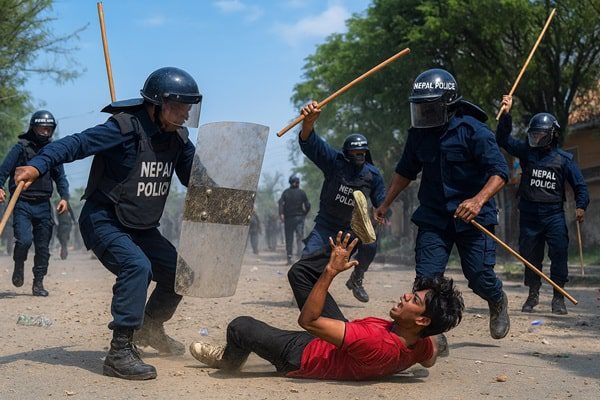
The situation has unravelled with a speed that would alarm even the most seasoned Himalayan mountaineer. Protests triggered by a now-rescinded ban on social media platforms exploded into deadly violence. By Monday evening, 19 demonstrators lay dead, and hundreds more were nursing wounds after security forces opened fire.
The anger didn’t stop there. Tens of thousands swarmed Kathmandu’s narrow lanes on Monday and Tuesday, torching government buildings, storming the parliament, and even forcing Prime Minister KP Sharma Oli to resign. Late into the night, demonstrators blockaded roads and occupied key state institutions.
That assurance came as soldiers checked vehicles, ordered residents indoors, and fanned across the capital in a show of strength not seen in years. Yet the emergence of fatigues on the streets did little to quell the fury of a population fed up with corruption, unemployment, and now, bloodshed.
Australians Told: Stay Put, Stay Safe
The advice is sobering for Australians in Nepal. Smartraveller is urging travellers to obey curfews, shelter in place, and listen closely to local instructions. Those needing urgent consular assistance are directed to call DFAT’s 24-hour Consular Emergency Centre on +61 2 6261 3305 (or 1300 555 135 if in Australia).
Adding to the turmoil, Tribhuvan International Airport in Kathmandu—the nation’s only international air hub—has been closed, with all flights cancelled. For stranded travellers, contacting airlines or travel providers is the only option, though given the scale of the crisis, “next available flight” may feel like a cruel joke.
Leaders Under Fire
Among the most startling developments was the attack on Nepali Congress leader Sher Bahadur Deuba and his wife, Foreign Minister Arzu Rana Deuba. Videos circulated online showing the pair being assaulted by angry mobs—a grim symbol of how deeply public trust has fractured.
The trigger may have been a government-imposed social media blackout, but the tinderbox had been primed for years. Allegations of endemic corruption, rising unemployment, and lack of opportunity have long simmered beneath the surface. The deaths of protesters ignited the powder keg.
An Uncertain Path Ahead
What comes next is anyone’s guess. With Oli gone and the army in charge of the streets, Nepal stands at a crossroads: either it stabilises under an uneasy military presence, or the unrest deepens into something even more dangerous.
For would-be travellers, this is not the time for Himalayan hikes or Kathmandu café hopping. Nepal’s famed hospitality, temples, and trekking routes will remain when peace returns. For now, Australians are better advised to sip their masala chai somewhere closer to home.
By Michelle Warner