

Thai Airways Soars Again: Lean, Profitable and Poised for Sustainable Growth.
Four years after navigating one of the most turbulent chapters in its history, Thai Airways International is back in the skies and in profit. With a spectacular return to the Stock Exchange of Thailand (SET), a powerful 200%+ share surge, and an unrelenting focus on profitability and premium business travel, the “new” Thai Airways is no longer in survival mode. It’s in ascent.
From Crisis to Comeback
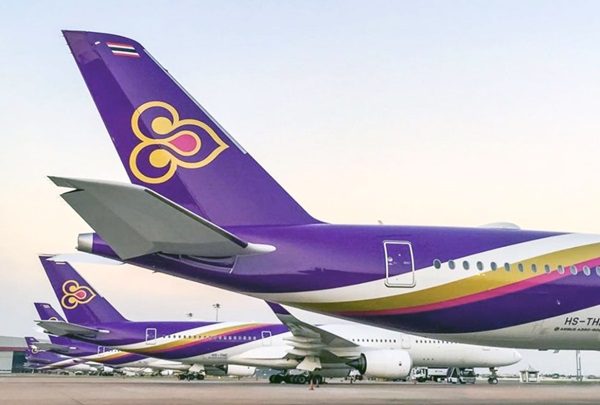
Royal purple tails stand proud, as Thai Airways’ fleet readies for its next ascent.
In 2020, the COVID-19 pandemic dealt a near-fatal blow to Thai Airways, forcing it into bankruptcy protection with over US$11 billion in debt. Years of financial mismanagement, bloated costs, and political interference compounded the crisis. The airline filed for rehabilitation in May 2021 under court supervision—a move some called its final lifeline.
But that rehabilitation has proven transformative. Between 2020 and 2023, the airline slashed debt, sold non-core assets, exited unprofitable routes, and restructured labour and fleet operations. By early 2024, Thai Airways had returned to the black.
Profit/Loss Summary (2020–2025):
- 2020:Loss of ฿141 billion
- 2021:Loss of ฿55 billion
- 2022:Loss reduced to ฿12 billion
- 2023:Net profit of ฿12.5 billion
- 2024:Net profit of ฿18.7 billion
- 2025 Forecast: Net profit expected to exceed ฿21 billion with 25% net margin
Ten consecutive profitable quarters—including typically weak Q2 and Q3—support this optimism. Bookings for H2 2025 remain strong, bolstered by business travellers from Europe, Australia, and regional hubs, despite regional tourism dips.
Fleet: From Bloated to Balanced
Prior to bankruptcy, Thai Airways operated a vast, inefficient fleet of 103 aircraft, including multiple aircraft types—from the Airbus A340-600 to the Boeing 747-400, that incurred heavy maintenance costs.
Post-rehabilitation (2025):

From near-collapse to soaring heights, Thai Airways crafts a textbook tale of resilience.
The fleet has been streamlined to 67 aircraft, including:
- Airbus A350-900(new flagship for long-haul)
- Boeing 777-300ER
- Airbus A320(regional and short-haul)
- Decommissioned:747s, A340s, and older 777s
In late 2023, Thai Airways placed a landmark order for 45 Boeing aircraft (mostly 787 Dreamliners), with options for 35 more. Deliveries begin in 2028—well after current US-Thailand trade talks—discrediting rumours of political influence.
Chairman Lawaron Sangsanit reaffirmed that fleet decisions are “commercial, not political.” CEO Chai Eamsiri added that further acquisitions will be guided by route demand, fuel efficiency, and long-term returns.
Investor Confidence Skyrockets
On 4 August 2025, Thai Airways resumed trading on the SET. Within 48 hours, its share price had tripled, climbing from ฿4.48 to ฿13.80. Analysts say the rally reflects genuine investor confidence rooted in operational turnaround, lean cost structure, and renewed brand equity.
“This is not a bubble,” said Mr Chai. “We’ve built a business model that’s profitable year-round, not just in high season.”
Strategic Shift: Profit Over Politics
Unlike its pre-2020 incarnation, the reborn Thai Airways is decisively profit-driven. The company has shifted from reliance on low-yield leisure traffic to prioritising high-value business routes to Europe, Australia, and regional capitals.
The recent resumption of daily flights to Cambodia despite regional tensions illustrates this resolve. “Our operations are based on logic, not fear,” said Mr Chai. We are resilient and agile.”
Should net profit surpass the 25% threshold in 2025, Thai Airways is also considering issuing dividends, marking a significant milestone for shareholders and government stakeholders.
SWOT Analysis: The New Thai Airways
Strengths
- Strong profitability and cash flow
- Strong brand recognition
- Lean, modern fleet under renewal
- Focus on premium markets
Weaknesses
- Limited aircraft availability until 2028
- Still rebuilding international alliances
- Smaller fleet restricts network growth
Opportunities
- Expansion into high-yield business routes
- New code-sharing and alliance partnerships
- Regional premium tourism markets
Threats
- Geopolitical instability (e.g., Cambodia border tension)
- Fuel price volatility
- Delays in aircraft delivery
Looking Ahead
Thai Airways now stands as a symbol of resilience. No longer weighed down by debt or outdated equipment, it has rebuilt itself as a competitive global carrier—proudly independent of political meddling, with investors, regulators and passengers again on board.
“Discipline and data, not deals and diplomacy, will drive our future,” said Chairman Lawaron.
By Andrew Wood
 BIO
BIO
A Yorkshireman by birth and a Bangkokian by choice, Andrew J Wood has been exploring Southeast Asia’s hospitality and culinary landscapes since 1991. A seasoned travel writer and hotel reviewer, Andrew brings old-school charm and a deep affection for gracious service to every piece he pens. For him, the perfect Sunday is slow, savoured, and best enjoyed with dessert.