

The Aussie traveller, once besotted with bullet trains and Harajuku’s hustle, has matured. Today’s discerning downunderer is venturing beyond Japan’s glossy Golden Route—Tokyo, Osaka, Kyoto—in search of deeper, quieter, more delicious adventures. And the data backs it up.
According to the Japan National Tourism Organization (JNTO), three little-known yet richly rewarding prefectures—Ishikawa, Gifu, and Wakayama—have seen astonishing year-on-year growth in overnight stays by Australians, with all three recording jumps of more than 90% from May 2024 to April 2025.
The leader of the regional pack? Ishikawa Prefecture enjoyed a 92.8% increase to 131,260 overnight stays from Australians. Gifu followed closely with a 91.3% rise to 64,490, while Wakayama wasn’t far behind, up 90% with 15,660 overnight visits.
Now, let’s not get ahead of ourselves—these figures still pale in raw volume next to the tourist titans: Tokyo welcomed 2.6 million Aussies (up 30%), Osaka had nearly 987,000 (up 55.8%), and Kyoto saw over 785,000 (up 32.7%).
But in terms of growth rate? These quieter corners are leaving the big three in their Mount Fuji dust.
The trend is clear: Aussies want more than neon and noodle bars—they want temples without turnstiles, landscapes without lines, and a ramen bowl that hasn’t already been on TikTok.
Let’s step off the beaten path together, shall we?
Ishikawa Prefecture: Gold Leaf and Cultural Grace
Facing the Sea of Japan, Ishikawa is a postcard-perfect blend of art, architecture and edible artistry. At its heart is Kanazawa, the elegant capital where kimono-clad visitors stroll past Kenroku-en Garden—considered one of Japan’s finest—with gold-leaf ice cream in one hand and a sense of serenity in the other.
This is a city that does “old Japan” without the crowds. You can meander through the Higashi Chaya District’s preserved teahouses, wander the Nagamachi Samurai District, and even try at gold leaf craftsmanship—or admire it atop a custard tart.
Foodies will find heaven on a stick (literally) at Omicho Market, where around 200 stalls serve grilled oysters, sake-marinated scallops, and sashimi so fresh it could start a conversation.
Beyond Kanazawa lies the 21st Century Museum of Contemporary Art, the rejuvenating Kaga Onsen villages, and rural communities preserving centuries-old traditions of lacquerware and ceramics. For Australians used to a flat white and a beach towel, it’s an exotic—and charming—gear shift.
Gifu Prefecture: Storybook Scenery and Samurai Roads
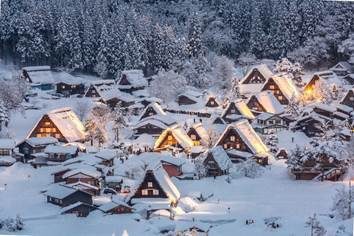
Shirakawago winter, Gifu
Landlocked but bursting with character, Gifu is drawing Aussie travellers into its romantic rural rhythms. The headline act is undoubtedly Shirakawa-go, a UNESCO-listed village where you can overnight in a gassho-zukuri thatched-roof farmhouse with mountain views and sizzling Hida Beef on your plate.
Elsewhere, Gifu’s secret sauce lies in its reverence for craft and heritage. Try a swordsmithing session in Seki, or wander through Takayama, an Edo-period town that still hosts famous seasonal festivals with lanterns, processions, and far more geisha than gadget shops.
Those craving a bit of wellness will find it bubbling up in the Gero Onsen, while the quaint village of Gokayama charms with its traditional arts and regional dishes.
But it’s the Nakasendo Trail that’s catching Aussie hearts. A historic road used by samurai, monks and merchants, this ginkgo-lined path weaves between sleepy towns where shopkeepers still bow, and silence is broken only by the crunch of your boots. If ever a route embodied the slow travel trend, this is it.
Wakayama Prefecture: Pilgrimage, Peace and Perfect Ramen
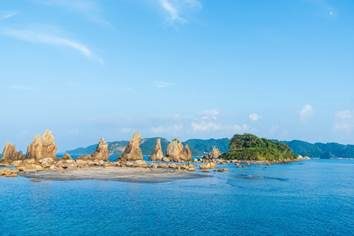
Wakayama coastline
Down on the Kii Peninsula, spiritual serenity awaits in Wakayama, home to some of Japan’s most treasured religious sites. Atop the forested peaks of Koyasan, more than 100 Buddhist temples—over 50 of which offer guest lodging—invite visitors to trade hotel slippers for zazen meditation and vegetarian feasts.
The sacred Kumano Kodo trails, stretching across 258km of misty mountain paths and ancient shrines, offer one of Japan’s most soulful journeys. Unlike the Shinkansen, this trip encourages slowness, silence, and soul-searching.
But all that enlightenment works up an appetite. Enter Wakayama ramen, a revered regional specialty that inspires an inter-prefecture pilgrimage. Rich, porky, and proud, it’s as essential to the experience as any shrine.
And for those still craving a splash of sand, Shirahama Beach delivers with clear water, soft white sand, and very few crowds. It’s where the barefoot and the mindful meet.
From Tourist Trail to Traveller Tales
The numbers are in, and they tell a story of Australian travellers turning into travellers, not just tourists. This new wave of cultural curiosity is breathing life into regional Japan, supporting local economies, and adding depth to the Aussie travel narrative.
“These rising visitor numbers reflect a growing appreciation for Japan’s cultural and geographic diversity,” a JNTO spokesperson said. “Aussies are no longer just skimming the surface—they’re diving in.”
And frankly, good on us. Because while Tokyo will always dazzle, the heart of Japan beats strongest in its quieter prefectures, where gold leaf glimmers, shrines whisper, and the ramen comes without a queue.
So next time you’re booking that Japan trip, don’t just follow the crowd—follow your curiosity. Whether it’s Ishikawa’s samurai grace, Gifu’s mountain poetry, or Wakayama’s spiritual heartbeat, the Japan you’ve yet to meet may be the one you remember forever.