

Amidst the suited-up buzz and tech-induced chatter of the 3rd UNESCO Global Forum on the Ethics of Artificial Intelligence, one speaker landed with the elegance of a Vietjet flight and the heart of a seasoned humanitarian. Dr Nguyen Thi Phuong Thao, Vietnam’s celebrated billionaire and Chairwoman of both Sovico Group and Vietjet Air, took the stage not just with credentials but with character. And what she delivered was less a keynote and more a wake-up call.
“I am here not just as a businesswoman, not just as a PhD in automation,” Dr Thao began, her tone warm yet resolute, “but first and foremost—as a mother.” A pause. “A mother who believes that technology must serve humanity.”
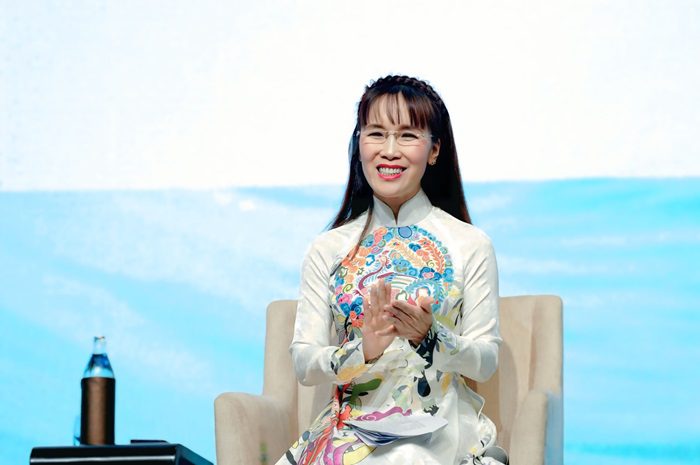
Nguyen Thi Phuong Thao, Chairwoman of Sovico Group and Vietjet Air
It was a moment that hung in the air, not unlike the scent of fresh mangoes on a Thai breeze. This was no rote recital of digital dogma. This was heart over hardware, ethics over ego—and a refreshing splash of humility in an otherwise algorithm-heavy affair.
The UNESCO Forum, hosted in bustling Bangkok from 24–27 June 2025, gathered more than 800 delegates from its 194 member states. Heads of state, tech titans, educators, and AI experts all convened to discuss one of the most pressing questions of our time—how to steer artificial intelligence toward the common good without veering off the ethical rails.
UNESCO Director-General Audrey Azoulay aptly declared it a “pivotal moment in human history”—and she wasn’t being theatrical. With AI shaping everything from job markets to school curricula, Azoulay urged a collective push for global cooperation, insisting that “no one be left behind.”
Thailand’s Prime Minister, Paetongtarn Shinawatra, opened the forum by doubling on inclusivity, sustainability and that rarest of modern policy gems—ethics. Bangkok was buzzing with traffic and a very real sense of purpose.
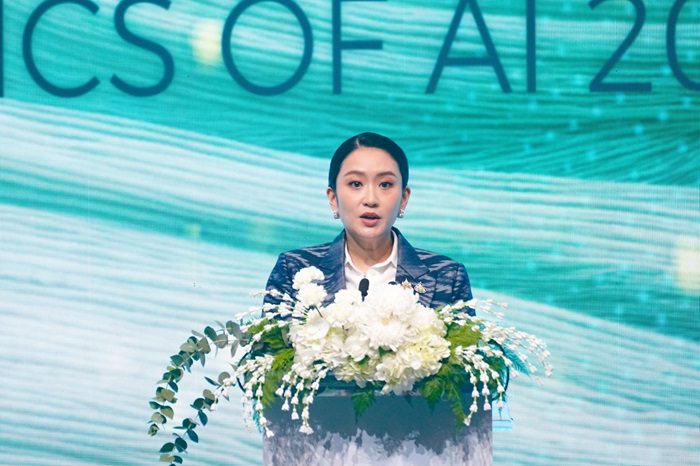
Thai Prime Minister Paetongtarn Shinawatra
Enter Dr Thao, the only speaker who managed to weave in tuk-tuks, banking apps, and the dignity of the everyday citizen into a speech about cutting-edge tech. Now that’s talent.
She didn’t arrive with robotic slides or cryptic tech jargon. She arrived with stories—real ones. Stories of rural women using Vietjet’s digital bank, Vikki, to access credit for the first time, of students from remote Vietnamese provinces booking their first-ever plane trip, and of equity, not as an abstract concept but as a lived experience.
“Technology must be designed to create a fairer, more inclusive world,” she said. “Especially for the next generation.”
This woman built a no-frills airline empire and took it globally while elevating women in business and redefining Vietnamese entrepreneurship. But the way she spoke—quoting no charts, but a truckload of conviction—made one thing perfectly clear: she sees AI as a tool for transformation, not for domination.
“In the age of artificial intelligence,” she proclaimed, with the casual grace of a seasoned diplomat, “there is no difference between myself—a billionaire—and a tuk-tuk driver.”
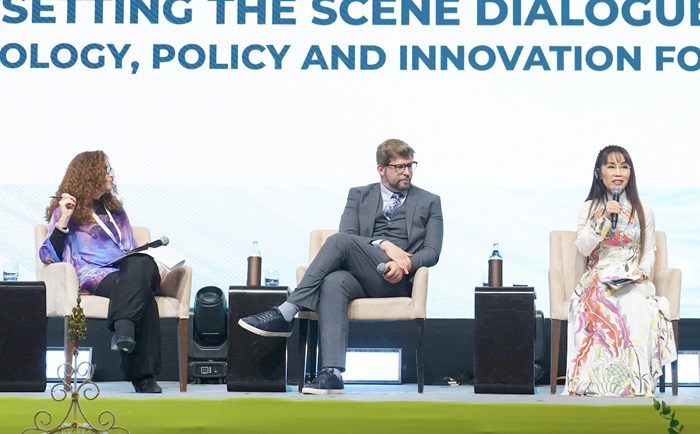
Chairwoman of Vietjet Air at the UNESCO Global Forum
One suspects she meant it. And in a forum teeming with declarations of ‘responsible innovation,’ her sincerity drew the most prolonged applause.
Dr Thao argued that if we are to truly ‘democratise’ technology, AI systems must be trained on transparent, multilingual, and bias-free data. Her endorsement of UNESCO’s proposed “Fair Data Fund” wasn’t just lip service—she pledged both operational and financial backing from Sovico Group, Vietjet, and HDBank.
And while the big players from the West rattled off policy papers, Thao reminded them that the digital future must not be built for the privileged few, but with the forgotten many in mind.
“Policies must place vulnerable communities at the centre,” she said. “Women, girls, the geographically isolated—these are not passive recipients of innovation. They must be co-creators.”
It’s a message that feels old-fashioned in the best possible way: that progress without compassion is no progress. A technological ‘do unto others,’ if you will.
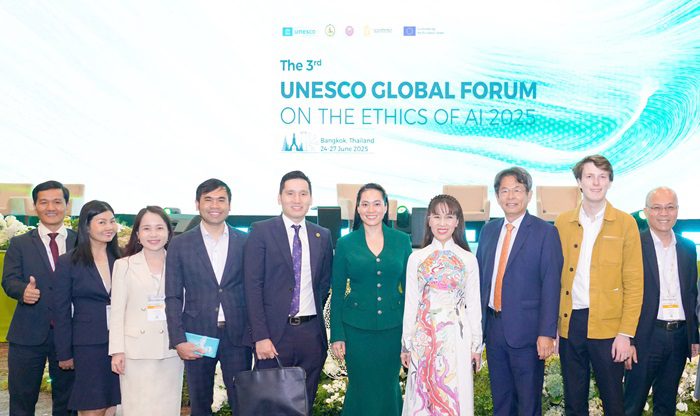
Chairwoman of Vietjet Air at the UNESCO Global Forum
And yet, it wasn’t all heartstrings and high ideals. Dr Thao brought a canny business edge to her message, reminding delegates that ethics and economics needn’t be opposing forces.
“We are committed to building a world where technology is not only intelligent,” she declared, “but compassionate.”
A subtle dig, perhaps, at the Silicon Valley set, where profit too often outpaces principle.
Dr Thao’s ongoing support for UNESCO and broader United Nations causes—ranging from women’s empowerment to sustainability initiatives in science and education—is more than just corporate social responsibility. It’s business as stewardship, a tradition as old as trade itself, yet desperately missing in many boardrooms today.
As delegates took their final photos and tech firms packed up their futuristic displays, one couldn’t help but feel that the most forward-looking idea had come not from a laboratory, but from a woman who had seen firsthand the power of access.
Access to money. To opportunity. To dignity.
In short, to a seat at the table.
As she left the stage, a young Thai delegate whispered to her colleague, “She makes AI feel human.”
Indeed, she does.
And in this brave new digital world—where lines blur between bots and brains—that may be the kind of leadership we need most.
By Karuna Johnson