

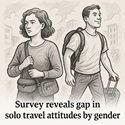
 It turns out not all solo travellers are created equal—especially when it comes to safety. While both men and women are embracing the joy of wandering the world solo, a fresh survey from Global Rescue suggests they’re not packing the same mindset alongside their passports.
Yes, it’s 2025, and while the world is indeed getting smaller, the gap in how genders approach solo travel seems as broad as ever. The Global Rescue Traveller Sentiment and Safety Survey, hot off the digital press this Spring, uncovers a stark contrast in confidence, caution, and carry-ons between male and female adventurers.
Men Dive In. Women Look Both Ways.
Let’s begin with destination dodging: 49% of women admitted they’ve deliberately scratched entire countries off their solo itinerary, all thanks to safety concerns. Just 39% of men did the same. In fact, a somewhat confident 57% of men confessed they’ve never avoided a destination—compare that to a more reserved 39% of women.
Is this brave or brash? That’s up for debate. But the data suggests men are more inclined to roll the dice, while women, quite rightly, do their research, weigh the odds, and err on the side of caution.
Feeling Safe Is a Gendered Privilege
Here’s where it gets telling. Asked whether they feel safe travelling alone, a hearty 74% of men gave it a confident nod. Women? Just 51% could say the same.
That 23-point gap isn’t just a statistic—it’s a reflection of a travel industry that still doesn’t always meet women halfway. While solo travel is booming, the experience is coloured by a gendered lens. For women, every hotel check-in, late-night Uber ride, and stroll down a cobbled alley comes with extra calculations.
Safety Starts with the Shoulder Strap
When it comes to theft prevention, the gap widens again. An impressive 79% of women reported using cross-body bags or fanny packs to keep their belongings close, compared to a laid-back 31% of men. Whether it’s paranoia or prudence, women are travelling with their eyes wide open and their zippers zipped shut.

Dan Richards is standing in the operations room.
As Dan Richards, CEO of The Global Rescue Companies and a board member of the US Travel and Tourism Advisory Board, put it rather succinctly:
“Solo travel is on the rise, but the experience is not equal for everyone.”
He went on to explain that women are not only travelling more, but doing so with an intentionality that’s reshaping what it means to be a safe solo traveller.
A Market That Deserves More Than Lip Service
What’s more, the findings come amid a broader realisation: women are fast becoming the dominant force in solo travel. But with that growth comes an obvious message—if travel companies, destination marketers, and tour operators want a piece of this market, they’d better start listening to what women want: safety, reliability, and respect.
“These numbers reflect more than just personal preference—they reflect how gender shapes travel experiences,” Richards added. “If you want women’s business, you need to earn their trust.”
And that, dear reader, isn’t just about pink travel brochures or female-only tours. It’s about real-world safety features, local cultural briefings, on-the-ground security, and policies that make a difference.
The Road Ahead
For men, the numbers reflect a confidence, sometimes bordering on overconfidence, in their ability to handle solo travel. For women, the narrative is one of awareness, strategy, and often, compromise. They’re not avoiding travel. They’re simply adapting to a world that hasn’t caught up with them yet.
So the next time someone romanticises solo travel as a great equaliser, spare a thought for the women who’ve mastered the art of vigilance with style, grace, and a hidden money belt.
While the journey may be solo, safety shouldn’t be.
By Susan Ng