 When shopping sprees and summits drive GDP, you know the UAE’s not just putting on a show—it’s staging an economic masterclass.
If you thought festivals were just for fireworks and street food, think again. In the United Arab Emirates, they’ve been quietly doubling as economic engines—churning out jobs, GDP points and a global reputation that’s anything but subtle.
At the 2025 edition of Arabian Travel Market (ATM), tourism’s version of Davos with less snow and more lanyards, a posse of industry powerhouses took to the stage to peel back the curtain on the UAE’s secret sauce: strategically staged spectacles. From Dubai’s shopping bonanza to Abu Dhabi’s Vision 2030 playbook, it’s clear the Emirates aren’t just entertaining the world—they’re inviting it to invest.
Dubai: Shopping Its Way to the Top
Ahmed Al-Khaja, CEO of Dubai Festivals and Retail Establishment, didn’t so much address the crowd as roll out a red carpet of results. He spoke with the confidence of a man whose city built an empire on air-conditioned malls and imported ice rinks.
“The Dubai Shopping Festival, launched in 1996, is not just a retail event—it’s a cultural mainstay,” he said. “It brings in the tourists, sure, but it also injects billions into our economy. That’s not a side benefit. That’s the model.”
And he’s not overstating it. The DSF, once considered an off-season gimmick, now pulls in visitors by the planeload every year, serving as Dubai’s retail version of the Olympics—except it happens annually, and no one has to do laps around a velodrome.
It’s retail therapy with a GDP bonus. In the process, it has helped establish Dubai as a global stage where shopping, spectacle, and serious business mingle over flat whites and fountain shows.
Abu Dhabi: Building a Legacy, Not Just a Ledger
Meanwhile, in the capital, the tone is a touch more stoic—but no less ambitious.
Mubarak Al Shamsi, Director of the Abu Dhabi Convention and Exhibition Bureau, offered a more thoughtful reflection on where the events strategy fits into the broader scheme of things. “Yes, we’ve hosted major global exhibitions and seen direct returns,” he noted. “But more importantly, these events align with our long-term goals: healthcare, sustainability, innovation and energy. Vision 2030 isn’t just a slogan—it’s a framework.”
In true Abu Dhabi fashion, they’re playing the long game. Think fewer confetti cannons, more clean energy conferences and cultural diplomacy. Less razzle, more roadmap.
That said, don’t mistake measured tone for lack of action. New additions to the events calendar—such as a blockbuster Harry Potter attraction and a culinary institute from chef Alain Ducasse—prove Abu Dhabi can dazzle with the best of them when it chooses to.
Ras Al Khaimah: The Underdog That Doesn’t Know It
Then there’s Ras Al Khaimah, a name that doesn’t yet roll off the average tourist’s tongue—but might soon.
Iyad Rasbey, VP of Destination Tourism Development, made it clear that the northern emirate is punching well above its weight. “Last year, we saw 40% growth in tourism,” he said, with MICE (Meetings, Incentives, Conferences and Exhibitions) emerging as a surprise heavyweight. “It’s now our fourth largest tourism segment.”
Past events like the Global Citizen Forum and the Arab Aviation Summit haven’t just filled hotel rooms—they’ve brought in investors, high-net-worth individuals, and—crucially—airline routes. Ras Al Khaimah International Airport is now connected to 11 cities globally, up from just a few dusty runways ago.
It’s a tidy lesson in leverage: stage the right event, and the world not only watches—it shows up.
Booking.com, Airbnb, dnata: What’s Trending?
Away from the main stage, a lively discussion featuring Booking.com’s Fouad Talat, dnata Travel Group’s John Bevan, and Airbnb’s Amani O’Neill revealed just how granular the new travel economy has become.
Forget bucket lists—these days, it’s all about microtrends. From “sleep tourism” (where people pay to nap, not sightsee), to “dark tourism” (visiting places that witnessed tragedy), and even “coffee tourism” (yes, it’s a thing), the travel playbook is being rewritten by attention spans and algorithms.
The panel discussed how providers need to adapt their marketing to stay ahead. “Don’t dismiss trends just because they’re niche,” one speaker warned. “Today’s weird is tomorrow’s mainstream.”
ATM 2025: A Global Stage With a Local Agenda
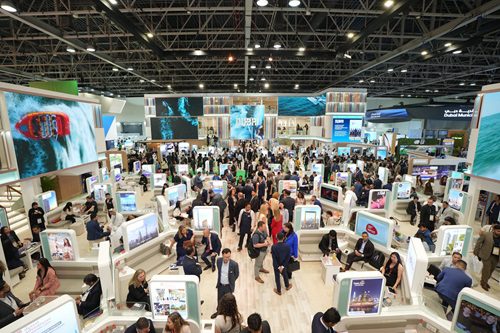
The Business Events Stage at ATM this year is more than just a podium—it’s a proving ground. With over 2,800 exhibitors and more than 55,000 industry delegates in attendance, it’s one of the few places where a handshake can still seal a deal.
Tomorrow promises further insights, including an exclusive networking session with international associations, offering delegates a rare chance to trade war stories and WhatsApp numbers.
It’s all part of the UAE’s broader narrative: ensuring that when the world comes to visit, it stays to do business.
Final Word: When a Country Throws a Party With Purpose
The UAE hasn’t just mastered the art of event planning—it’s turned it into economic choreography. These aren’t your run-of-the-mill expos and food truck weekends. They’re calibrated, curated, and designed with legacy in mind.
By blending retail buzz with policy vision, and glitzy forums with grassroots growth, the Emirates are rewriting what it means to “host with purpose.” It’s not just tourism—it’s transformation. And in true UAE fashion, they’re doing it with flair, funds and forward-thinking.
By Jason Smith, filed from Arabian Travel Market, Dubai