
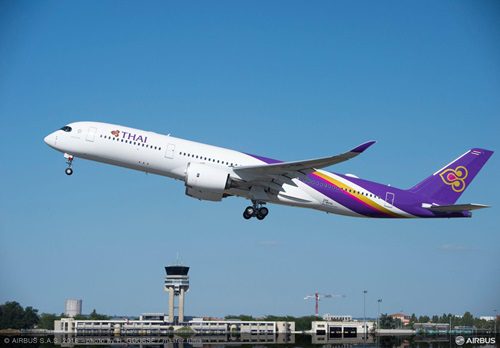
 In a move that blends practical wisdom with a flair, Thai Airways International (THAI) has shaken hands with European aerospace giant Airbus to give its long-haul A350 fleet a dash of modern magic — and not a moment too soon.
Signed under a formal Letter of Intent, this fresh collaboration will see the airline’s fleet of A350-900s undergo a cabin transformation worthy of a royal curtain raise. It’s not just about fancy new seats, mind you. This is about rekindling the elegance, charm, and comfort that once defined the golden age of air travel — the thoughtful detailing that reminds passengers why flying THAI was once a little more than simply getting from A to B.
Beginning in 2028 — yes, patience will be required — THAI will gradually pull each aircraft into the hangar for a thorough spruce-up. And when we say “spruce-up,” we’re not talking about polishing the tray tables. These aircraft are getting a complete interior renaissance.
Passengers lucky enough to sit up front in Royal Silk Business Class can expect reimagined, lie-flat seats designed with comfort, posture, and, dare we say, a bit of dignity in mind. For the growing crowd of travellers who seek a notch above Economy but don’t quite fancy a mortgage for Business, a brand-new Premium Economy cabin is being rolled out too — a smart nod to modern travel habits.
Economy travellers aren’t being left in the cargo hold either. They’ll enjoy updated seating, modern cushioning, and — finally — a next-gen inflight entertainment system that doesn’t require the finger strength of a piano prodigy to operate.
“We’re thrilled to partner with THAI on this important fleet update,” said Balinda Zhang, Airbus’ Head of Commercial Services for Asia-Pacific. “This investment speaks volumes about their commitment to passenger experience, and we’re delighted to support them on that journey.”
Well said, though one suspects the THAI board might be even more delighted if these improvements help win back international travellers’ hearts (and wallets). Let’s face it — while the A350 is a nimble and efficient bird, cabin interiors age about as gracefully as in-flight chicken.
The plan is to perform the retrofit in stages, ensuring that THAI’s operational wings remain unclipped. This phased approach means passengers won’t be jolted mid-booking to find their dream flight suddenly rerouted via somewhere like Ulaanbaatar.
Airbus, as project overseer, brings considerable credibility to the effort. And it’s not just about brand prestige — there’s a comfort in knowing the very people who built the A350 are the ones freshening it up. It’s like having the original architect refurbish your house rather than a bloke from the hardware store.
This agreement also reaffirms a longstanding friendship between the two firms. THAI and Airbus have weathered aviation’s many storms together — from fuel crises to pandemics to the rise of the middle seat. Their mutual trust runs deeper than press releases suggest.
And while some might say, “Why not just buy new aircraft?” the answer lies in fiscal wisdom. New jets don’t come cheap, and the A350 remains one of the most fuel-efficient and versatile aircraft in the sky. Retrofitting them with a new heartbeat is not only savvy — it’s sustainable.
Indeed, the whole effort marks a broader shift in the aviation world: value-driven renewal over vanity-driven replacement. Airlines are learning that passengers care more about seat comfort, space, and sanity than whether the rivets on the wing are six months old.
By 2029, once the retrofit is well underway, THAI’s A350s could be among the most desirable long-haul options in the skies. In a world overrun with budget carriers squeezing knees and upselling peanuts, THAI’s decision to invest in quality is a bold — even noble — act.
So here’s to the return of charm at 38,000 feet. With Airbus by its side, Thai Airways is preparing to retake flight — not just in distance but in distinction.
By Karuna Johnson