
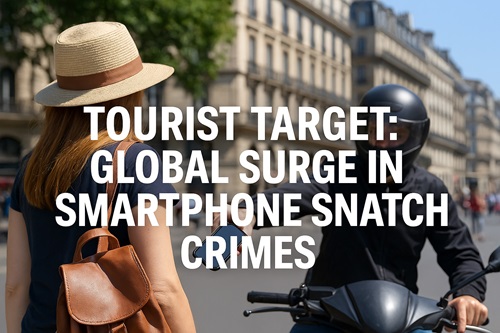
 Smartphone snatching is a fast, brazen crime in which thieves grab a mobile phone—often right out of a victim’s hand—and disappear before anyone has time to react. These thefts usually happen in public areas like crowded streets, markets, or public transportation hubs. The thieves may be on foot, bicycles, scooters, or moving vehicles. With the high resale value of smartphones and the sensitive data they contain, it’s no wonder these devices have become top targets for criminals worldwide.
This trend isn’t limited to one region. Around the globe, significant cities report spikes in smartphone theft, especially in places that draw large numbers of international visitors. South American cities such as Buenos Aires, Bogotá, and Rio de Janeiro are known hotspots for mobile theft. European travel favorites like Barcelona, Paris, Rome, and Lisbon have long-standing reputations for pickpocketing and quick snatch crimes. In Southeast Asia, destinations like Bangkok, Ho Chi Minh City, and Manila frequently make travel advisories for their high incidence of mobile phone theft.
Even in the United States, where mobile theft might once have seemed less aggressive, cities like San Francisco, New York, and Los Angeles see organized phone theft operations. London has also become a concern for travelers due to a sharp rise in incidents involving moped-riding thieves who snatch phones from pedestrians and speed off.
And yes, tourists are being targeted. The reasons are both practical and opportunistic. Travelers are often distracted, relying heavily on their phones for navigation, translation, bookings, and photos. This frequent usage in unfamiliar environments makes them more vulnerable to attack. Tourists may also carry newer or higher-end devices than locals, making them especially appealing to thieves. Plus, many aren’t aware of local crime patterns or preventive behaviors, putting them at greater risk.
Seasoned travelers have begun to take notice of this growing trend. According to a Global Rescue survey, many experienced tourists are taking proactive steps to secure their devices abroad. The most popular method for preventing theft, used by 43% of travelers, is simply keeping the phone hidden in public. Others take additional measures, such as using Face ID, fingerprint security, or complex passwords. A smaller group enable remote tracking and erasure features like ‘Find My Device,’ while a few go further to lock their SIM cards to prevent misuse if the device is stolen.
When traveling, your smartphone is more than just a device—it’s your digital lifeline. It holds your itinerary, travel documents, banking access, communication tools, and a lifetime of photos and memories. Losing it isn’t just inconvenient—it can derail your entire trip. That’s why travelers are urged to avoid using their phones in crowded or congested areas. It’s safer to check your phone indoors, in cafés, or at secure locations like hotel lobbies. If you must use it outside, try to do so discreetly and remain fully aware of your surroundings.
Another essential precaution is to separate your phone from your most valuable physical items. Never store cash, credit cards, or ID in a wallet attachment on your phone. If your phone is snatched, losing all those items at once could be catastrophic. Worse still, a thief could lock you out of your accounts if your phone is connected to two-factor authentication for your email, bank, or other essential services. Managing consequences in advance—enabling account recovery methods and securing alternative access—is critical.
However, even with the best precautions, theft can still occur. If your smartphone is stolen while traveling, you should first report the incident to local authorities and file a police report. This documentation is applicable not only for potentially recovering your device but also for making insurance claims. Next, you should use a device tracking feature like Apple’s Find My iPhone or Android’s Find My Device to erase your data remotely. Contacting your cellular provider immediately is vital to disable the phone’s service and prevent misuse.
In the aftermath, you should change the passwords for all accounts connected to your phone, particularly email, banking, and social media platforms. If you use your phone for two-factor authentication, ensure you have backup codes or an alternative verification method; otherwise, you could be locked out of crucial services.
What you shouldn’t do is attempt to retrieve the phone yourself. Confronting or following a thief into an unfamiliar area can be extremely dangerous. Let the authorities handle recovery efforts. Also, don’t wait to act. The longer you delay disabling the device or securing your accounts, the more vulnerable your data becomes.
Smartphone snatching is a growing global issue, particularly in popular tourist destinations. But with preparation, caution, and awareness, travelers can reduce their risk and protect the devices that have become essential to modern travel. The key is to treat your smartphone like the valuable passport to your digital world that it truly is—because once it’s gone, the fallout can be more than just inconvenient. It can derail your journey, compromise your security, and expose your most private information.
Written by Harding Bush
BIO:
Harding Bush is a former Navy SEAL, an expert in procedures for high-risk travel, cultural awareness, crisis preparedness, and operational planning, and the associate director for security operations at Global Rescue, the world’s leading provider of medical, security, evacuation and travel risk management services.