
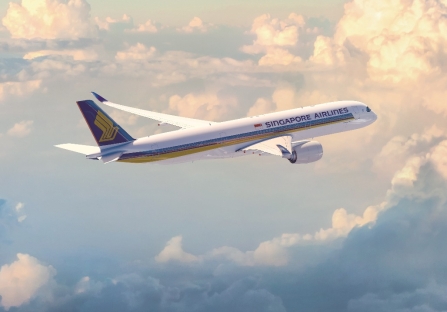
 Singapore Airlines Group (SIA) has reported a first-quarter net profit of $452 million for the fiscal year 2024/25, marking a significant achievement in mounting industry challenges. This milestone is underscored by robust passenger-flown revenue and strategic growth initiatives.
Passenger Revenue Boosts Profit
The Group’s total revenue increased by 5.3% year-on-year to $4,718 million in the three months ending June 30, 2024. Passenger-flown revenue rose by 4.1% to $3,828 million, driven by a 13.8% increase in passengers. Despite a 4.6% decline in yields, the passenger traffic surge and capacity growth contributed significantly to this positive outcome. However, the Group’s passenger load factor dipped slightly by 2.0 percentage points to 86.9%.
Cargo Revenue Remains Stable
Cargo flown revenue remained relatively stable, declining marginally by 0.2% to $541 million. Strong e-commerce flows and increased air freight demand due to the Red Sea crisis and port congestion supported the overall cargo demand. This led to a cargo load factor increase to 57.7%, mitigating the impact of a 19.1% decline in cargo yields due to enhanced bellyhold cargo capacity.
Rising Expenditure Amidst Challenges
Group expenditure rose by 14.0% to $4,248 million, with fuel and non-fuel expenditures increasing by 30.1% and 7.7%, respectively. Net fuel costs soared to $1,370 million due to higher fuel volumes, an 8.1% rise in fuel prices, and reduced fuel hedging gains. The increase in non-fuel expenditure was kept below the overall passenger and cargo capacity growth, reflecting rigorous cost management.
Decline in Operating and Net Profits
Despite the revenue growth, the Group’s operating profit for the quarter fell by 37.7% to $470 million. This decline was attributed to higher expenditure and lower yields. Net profit decreased by 38.4% to $452 million, influenced by reduced net interest income, lower surplus from asset disposals, and a decline in associated companies’ profits. A lower tax expense partially offset these negative impacts.
Solid Financial Position
As of June 30, 2024, the Group’s shareholders’ equity stood at $15.1 billion, down from $16.4 billion on March 31, 2024, primarily due to the redemption of all remaining Mandatory Convertible Bonds (MCBs). Total debt remained stable at $13.3 billion, leading to an increased debt-equity ratio of 0.89 times. Cash and bank balances were reduced to $10.1 billion, mainly due to MCB redemptions, but the Group still generated $1.2 billion in net cash from operations.
Fleet and Network Expansion
As of June 30, 2024, the SIA Group’s operating fleet consisted of 202 passenger and freighter aircraft with an average age of seven years and four months. In the quarter, the group added three new aircraft to its fleet, including an Airbus A350-900 and two Embraer E190-E2 aircraft for Scoot. The Group’s extensive network now spans 125 destinations across 36 countries, reflecting its ongoing expansion efforts.
In the first quarter, SIA launched services in Brussels and London Gatwick, while Scoot commenced operations in Koh Samui and Sibu. Further expansions include upcoming daily flights to Beijing’s Daxing International Airport and increased frequency to Beijing Capital International Airport.
Strategic Partnerships and Initiatives
The SIA Group continues to pursue strategic initiatives to strengthen its market position. The proposed Air India and Vistara merger received approval from the Indian National Company Law Tribunal in June 2024, pending foreign direct investment approval. This merger will give SIA a 25.1% stake in the enlarged Air India Group, enhancing its presence in the Indian market.
In July 2024, SIA and Garuda Indonesia received approval for a commercial joint venture agreement, paving the way for joint revenue-sharing flights, coordinated schedules, and joint marketing initiatives. This strategic alliance aims to offer more excellent value and connectivity to customers of both airlines.
In June 2024, SIA also signed a strategic partnership with Riyadh Air to explore connectivity and commercial cooperation opportunities. This partnership aligns with SIA’s strategy to expand its reach and enhance its service offerings.
Commitment to Sustainability
SIA’s commitment to sustainability was reinforced through a Memorandum of Understanding with Cathay Pacific Airways to collaborate on sustainable aviation fuel (SAF) and other sustainability initiatives. This collaboration underscores both airlines’ commitment to achieving net zero carbon emissions by 2050 and fostering industry-wide change.
Outlook and Future Prospects
The demand for travel remains strong, and the SIA Group is well-positioned to capitalize on growth opportunities while navigating industry challenges. Despite expected pressure on passenger yields due to increased capacity, the Group’s strategic initiatives and strong financial foundation provide a solid base for future growth.
The global airline industry faces challenges from heightened competition, supply chain constraints, inflationary pressures, and geopolitical uncertainties. However, the SIA Group’s strong balance sheet, digital capabilities, and strategic initiatives, including deeper partnerships and a focus on sustainability, position it to navigate these headwinds successfully.
The SIA Group remains committed to delivering exceptional service, expanding its network, and maintaining cost discipline as it continues to soar to new heights in the aviation industry.
Written by: Soo James