
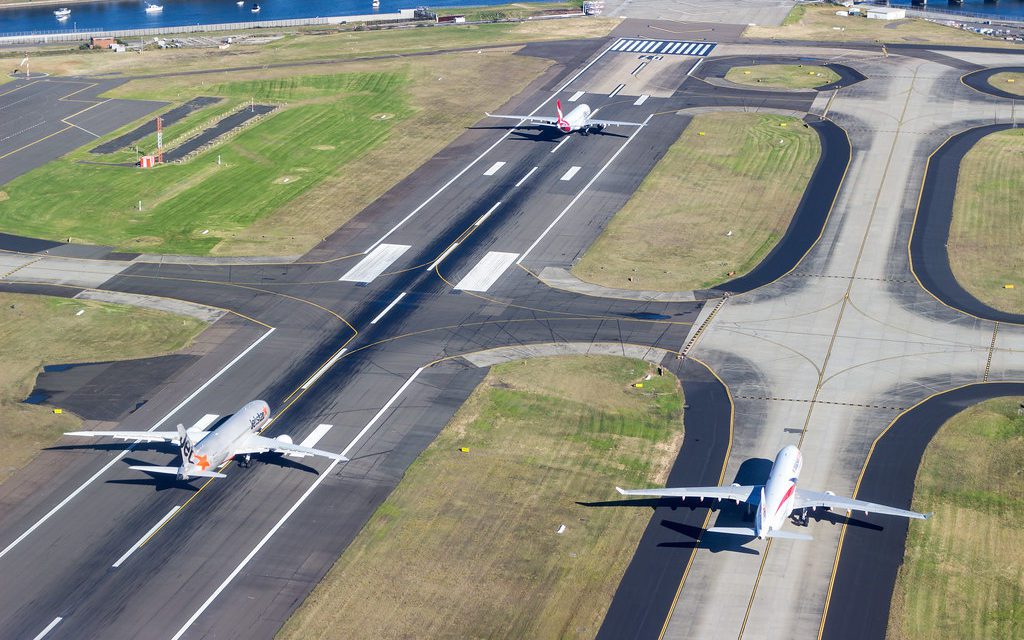
 The Australian Transport Safety Bureau (ATSB) will be closely monitoring the implementation of new take-off procedures at Sydney Airport following an incident in September 2022 where a British Airways Boeing 787 and a Qantas Airbus A330 flew too close to each other. The incident, which was deemed a ‘loss of separation occurrence’, highlighted a series of unusual circumstances that led to the mix-up.
The ATSB’s report on the incident revealed that the Qantas A330, which traditionally operates longer-haul flights, was being used for a domestic flight and therefore had a higher climb performance due to its lower fuel load. As a result, the departure controller did not anticipate that the A330 would turn at a different location than the 787 it was following, which led to the two aircraft flying too close to each other.
The incident triggered the Boeing aircraft’s collision avoidance system, which alerted its first officer before the Airbus was visually spotted. The ATSB’s director of transport safety, Stuart Macleod, stressed the importance of maintaining open communications between controllers and flight crews to minimize the risk of errors, especially in high-traffic terminal areas like Sydney.
The DEENA 7 SID, the standard instrument departure routing used by both aircraft, requires them to meet two separate conditions after take-off before turning to the northwest: pass the DEENA waypoint and climb to at least 6,000 ft. As there is no way to ensure that the aircraft will turn at the same location when conducting the DEENA 7 SID, the departure controller should consider various factors, including flight duration, fuel load, and associated climb performance.
During the incident, the separation between the two aircraft was reduced to 2.4 nautical miles laterally and 600 ft vertically, below the required separation standards for either ‘heavy’ aircraft or 1,000 ft vertically. The controller advised both aircraft, and separation was re-established.
The ATSB report stressed the importance of maintaining vigilance and using available systems and tools to ensure the safety of flights, especially in high-traffic terminal areas. The incident serves as a reminder that even the smallest details, such as flight duration and fuel load, can have a significant impact on flight operations and safety.
The implementation of new take-off procedures at Sydney Airport will be closely monitored by the ATSB to prevent similar incidents from happening in the future. As air traffic continues to grow, it is crucial that aviation authorities and industry stakeholders work together to ensure the safety of passengers, crew, and aircraft.
The aviation industry is continually evolving, and safety remains a top priority. As a passenger, it is essential to be aware of the potential risks involved in air travel and to follow all safety protocols and procedures to ensure a safe and enjoyable flight. As a society, we must continue to invest in research, technology, and training to enhance aviation safety and prevent incidents like the BA 787 & QF A330 incident from happening in the future.
In conclusion, the BA 787 & QF A330 incident serves as a stark reminder of the importance of maintaining vigilance and using available systems and tools to minimize the risk of errors in flight operations. The ATSB’s monitoring of new take-off procedures at Sydney Airport is a step in the right direction towards ensuring the safety of passengers, crew, and aircraft. As a society, we must continue to prioritize aviation safety and work together to prevent similar incidents from happening in the future.
Written by: Anne Keam