
 With historically low unemployment and “we’re hiring” signs all over the place, there’s an understandable push for more skilled migrants. There’s a session on it at the jobs summit on Friday morning.
But there’s a quicker fix: an untapped source of hundreds of thousands of skilled workers already in the country, many of whom would like to work but would be penalised for it.
Age pensioners who earn more than a minimal amount from paid work (A$490 a fortnight for singles) lose 50 cents out of every extra dollar they earn in reduced pension payments.
It’s a powerful disincentive. $490 a fortnight is $245 per week: that’s about nine hours’ income for a worker on the minimum wage with a casual loading.
Relaxing the income test – or at least the test on income from work – would have benefits beyond helping to meet our immediate need for skills and experience.
Longer term, it would reduce the need for bureaucrats to compile lists of skill shortages and attempt to pick migrants with the right skills to fill those gaps.
It would also ease the pressure that higher migration puts on the housing market, increasing prices.
Given the jobs summit is looking for solutions with widespread support, unlocking retirees’ skills would be a good place to start.
Few pensioners work
The idea is backed by small and big business lobby groups, National Seniors Australia and key federal independent MPs.
As of March 2021, about 2.5 million people were receiving the age pension. Only 92,000 – just 3.6% of them – declared earnings from employment.
There are three main ways we could make it easier for pensioners to work:
- lift the income test threshold for how much can be earned from working
- cut the income test when the threshold is reached
- remove the income test entirely
The third option isn’t as radical as it seems. Several countries, including Britain and New Zealand, don’t apply an income test.
The simplest would be option 1, allowing age pensioners to earn (say) an additional $500 per fortnight, which would amount to $990 per fortnight or $25,700 per annum.
Getting more into work needn’t cost much.
Our calculations suggest giving age pensioners currently working these hours the full pension would cost less than $442 million per year.
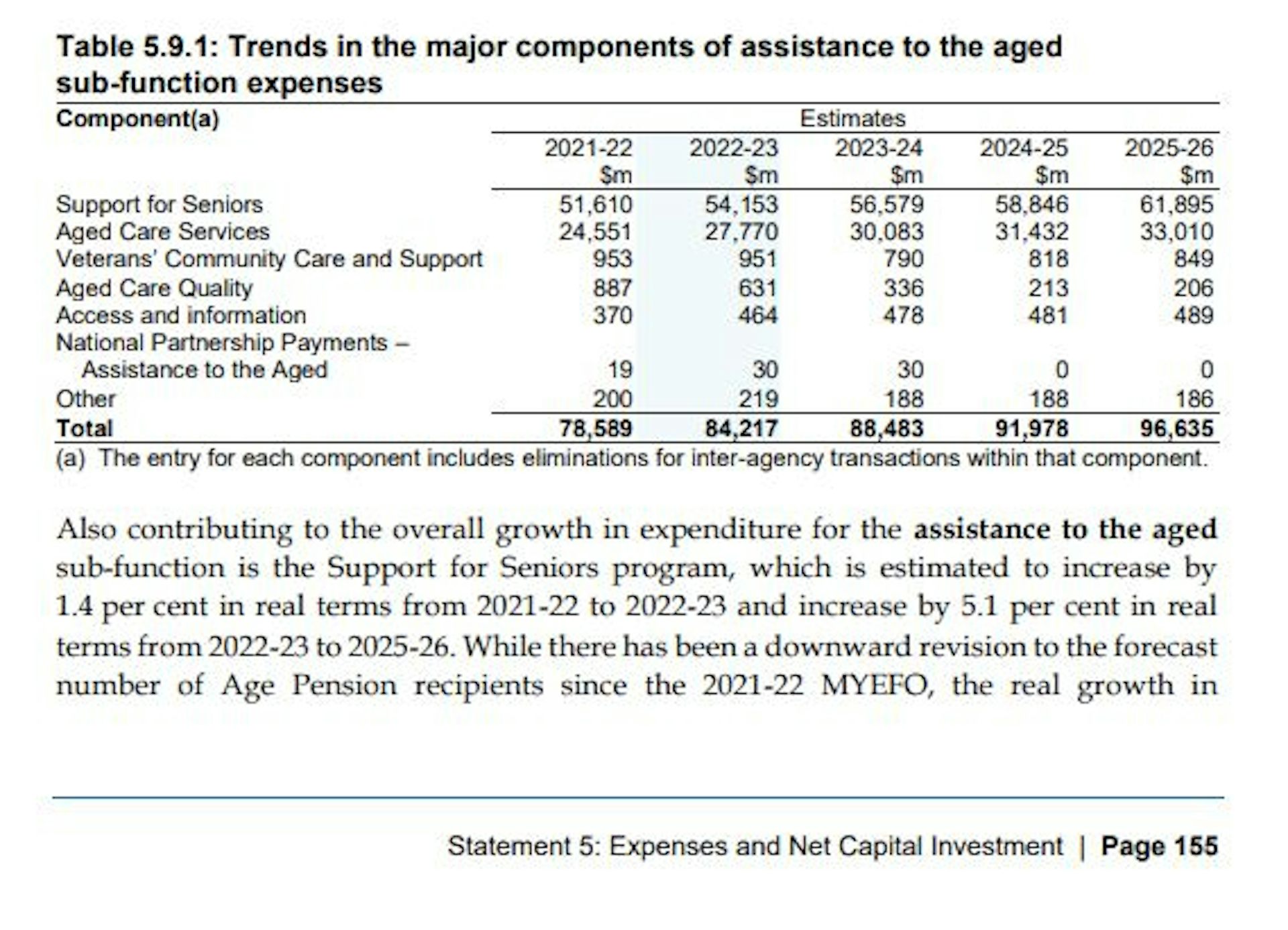
This cost would amount to 0.8% of the $54,153 million budgeted to be paid as support to seniors in 2022/23.
If more pensioners worked more hours, the cost would climb to $1,664 million, which is 3.1% of this year’s budgeted support for seniors.
The benefits would be substantial.
Each percentage point increase in workforce participation of those 65 years and older would boost the Australian labour force by around 43,000.
Hundreds of thousands more workers
As importantly, Australians aged 65 years and over are expected to be the fastest-growing population group by 2030.
On current population projections, each one percentage point increase in labour force participation by this age group would amount to 54,000 people.
If the change boosted participation by several percentage points, it would produce hundreds of thousands more workers, all already locals and most trained.
It looks to us to be an idea too good for the summit to pass up.
Written by:
Darryl Gobbett, Visiting Fellow, South Australian Centre for Economic Studies, University of Adelaide;
Michael O’Neil, Executive Director, SA Centre for Economic Studies, University of Adelaide
Reviewer: Peter Gill, Research Associate, SA Centre for Economic Studies, University of Adelaide
Disclosure statement: The authors do not work for, consult, own shares in or receive funding from any company or organisation that would benefit from this article, and have disclosed no relevant affiliations beyond their academic appointment.
This article appeared in The Conversation, which publishes informed commentary and debate sourced from the academic and research community: theconversation.com.
====================================================