
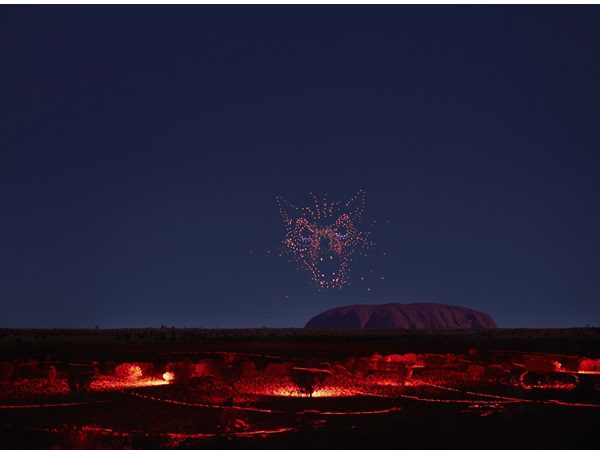
There are moments in Australian business when commercial logic and moral purpose finally stride forward together. The agreement unveiled this week between the Indigenous Land and Sea Corporation (ILSC) and tourism heavyweight Journey Beyond is one of those rare junctions, a transaction measured not merely by balance sheets but by land, legacy and long-overdue justice.
Under the deal, Journey Beyond will acquire the operational assets of Voyages Indigenous Tourism Australia, the company that runs Ayers Rock Resort at Yulara in Central Australia and the Mossman Gorge Cultural Centre in Far North Queensland. It is a commercial transaction on its face. But beneath it runs something far more profound: the most significant land return in the ILSC’s history and a $500 million economic dividend destined for First Nations communities.
For the Anangu people of Yulara and the Kuku Yalanji people of Mossman Gorge, the agreement marks a critical step toward regaining ownership of the very land that carries their Dreaming, their stories and their economic future.
The arrangement is straightforward in its intent. Journey Beyond will take control of Voyages’ operations. The land and buildings at both sites will, in time, be transferred to the relevant community corporations representing the Traditional Owners. At Yulara, that transfer will ultimately become the most significant single return of land the ILSC has ever delivered in both monetary value and physical scale.
It is not hyperbole to call this a turning point.
From Strategic Review to Structural Change
The process formally began in August 2024 after the ILSC initiated a sweeping strategic review of Voyages’ future. The brief was unambiguous: maximise Indigenous benefit, protect long-term employment and training pathways, and secure the future of two globally significant tourism destinations.
After months of market engagement and several years of deep community consultation with Anangu and Kuku Yalanji representatives, Journey Beyond emerged as the preferred buyer, a logical fit for an asset that sits at the intersection of experiential tourism and cultural responsibility.
Journey Beyond, established in 2016 and headquartered in Adelaide on Kaurna Country, is no minor player. It owns and operates 20 iconic Australian tourism brands, including The Ghan, Indian Pacific, Outback Spirit, Sal Salis Ningaloo Reef and Horizontal Falls Seaplane Adventures. The group employs more than 2,000 staff nationally and works with over 25 First Nations groups across its portfolio.
For ILSC chief executive Joe Morrison, the agreement closes a long chapter of groundwork.
“Today’s agreement is the culmination of years of work and engagement with Community to find a new operational owner for Voyages to facilitate the divestment of land to Community and ensure a bright future for Voyages, and the local Indigenous communities of Yulara and Mossman Gorge,” Morrison said.
“From the outset, the ILSC’s focus has been on maximsing indigenous benefit. Through the agreement announced today and the ancillary transaction documents, we will see more than $500 million in benefit flowing to First Nations Community.”
Those benefits will arrive in hard dollars and lasting assets. Once land ownership is formally transferred, both communities will receive lease payments from Journey Beyond under a 90-year lease at Yulara and a 10-year lease at Mossman Gorge. At Yulara, Anangu will also gain the freehold land parcels, buildings, and new housing and infrastructure investment tied to the transaction.
Tourism with a Social Conscience
Journey Beyond CEO Chris Tallent described the deal as both a commercial expansion and a values-driven alignment.
“Journey Beyond is thrilled to be working with ILSC, Anangu of Yulara, Kuku Yalanji of Mossman Gorge and the Voyages team. This marks an exciting expansion and perfectly aligns with Journey Beyond’s central purpose of creating amazing iconic experiences, that are immersive, authentic and uniquely Australian,” Tallent said.
“We are committed to supporting the ongoing development of the National Indigenous Training Academy (NITA) which provides training, development and employment pathways to grow the local Indigenous workforce not only in Central Australia but across all our brands.”
That commitment matters. Voyages’ long-standing role in Indigenous employment and training will remain intact under the new ownership. The existing management team will continue to lead the company. The cultural tourism model, sometimes politely described as “two-way benefit”, will be preserved and expanded.
Voyages chief executive Matt Cameron-Smith made that intention plain.
“We are excited for the next stage in Voyages journey, which will open up significant opportunities for the business, our guests, our communities and for our people,” he said.
“This partnership allows us to grow our footprint while staying true to our foundations – delivering world-class cultural tourism experiences in partnership with the communities we work with.”
For an industry too often scarred by extractive economics, the symbolism is powerful: profits still matter, but partnership now comes first.
Returning What Was Taken
The land on which Ayers Rock Resort stands was excised from Uluru-Kata Tjuta National Park in 1976. Nearly half a century later, it is at last on a clear path back to Anangu hands.
The Yulara Aboriginal Corporation (YAC) board did not mince words in welcoming the decision.
“The Anangu Traditional Owners of Yulara are very happy with the decision by ILSC to hand back the land that was originally excised from the National Park in 1976,” the board said.
“Returning Yulara to Anangu control is an investment in our future that will bring benefits in employment, education and support for Anangu enterprises.”
The Mossman Gorge land divestment will follow once the native title determination covering the site is finalised — a reminder that land justice in Australia still moves at the pace of litigation rather than memory.
Economic Signal Beyond the Red Centre
This transaction lands at a delicate moment for Australia’s tourism sector, which is still rebalancing after pandemic disruption, labour shortages and shifting global demand. Yet the scale of this agreement and the certainty of the lease structures send a strong investment signal: Indigenous-led tourism is no longer a niche proposition. It is now a central pillar of the nation’s visitor economy.
At Uluru alone, Ayers Rock Resort hosts more than 400,000 visitors annually. Mossman Gorge is one of Tropical North Queensland’s most visited natural and cultural assets. Under the Journey Beyond banner, both destinations will gain access to capital, national marketing muscle and experiential design expertise, but now with Traditional Owners firmly positioned as landlords, not tenants.
The Australian Tourism Research Institute has long argued that cultural tourism is among the fastest-growing segments of inbound travel. This deal moves that theory into permanent infrastructure.
A Commercial Transaction with a National Conscience
Final settlement is expected in early 2026, with the Yulara land transfer to Anangu also targeted for completion that year. For the ILSC, it fulfils a core statutory mission. For Journey Beyond, it delivers iconic assets. For Anangu and Kuku Yalanji, it restores economic control over sacred ground.
And for Australia, it offers something rarer still in modern commerce: a transaction that expands shareholder value while shrinking historical debt.
Useful links:
Indigenous Land and Sea Corporation – https://www.ilsc.gov.au.
Journey Beyond – https://www.journeybeyond.com.
In a nation still reckoning with its economic and cultural inheritance, this deal does more than move ownership from one balance sheet to another. It quietly rewrites the terms of engagement between tourism, capital and the Country.
At last, some returns are measured not in dollars earned but in ground regained.
by Michelle Warner – (c) 2025
Read Time: 6 minutes.
About the Writer
 Michelle Warner is a storyteller with jet fuel in her veins — the sort of woman who could turn a long-haul delay into a lesson in patience and prose. She began her career in media publications, learning the craft of sharp sentences and honest storytelling, before trading deadlines for departures as a flight attendant with several major airlines. Years spent at thirty thousand feet gave her a keen eye for human nature and a deep affection for the grace and grit of travellers everywhere.
Now happily grounded, Michelle has returned to her first love, writing, with the same composure she once brought to a turbulent cabin. Her work combines an editor’s precision with a traveller’s curiosity, weaving vivid scenes and subtle humour into stories that honour the golden age of travel writing. Every line is a small act of civility, polished, poised, and unmistakably human.