
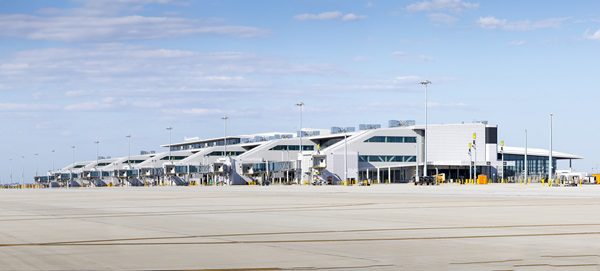
After half a century of talk, two decades of politics and more soil moved than in a suburban housing boom, Western Sydney International (Nancy-Bird Walton) Airport is almost ready to roll down its runway.
The $11 billion project has entered what insiders call the “switch-on” phase, where engineers, air traffic specialists, and a small army of staff begin testing everything from baggage carousels to biometric boarding gates. If it clicks, blinks, or beeps, someone at Badgerys Creek is currently trying to break it.
From paddock to precision
The Civil Aviation Safety Authority (CASA) has quietly joined proceedings, flying a twin-engine Cessna Conquest over the site to double-check every approach path and obstacle marking. The goal is to ensure no tower, mast, or ambitious gum tree interferes with the first jet to glide next year.
For Matt Duffy, WSI’s chief operating officer, it’s the moment the dream leaves the PowerPoint slides and becomes an actual airport.
“Decades of planning, years of construction and millions of work hours have got us to this exciting moment where we’re switching on all of the various systems and putting these brand-new assets through their paces,” he said.
Over the next few months, teams will run trial flights, baggage drills, and even simulated emergencies, the corporate equivalent of a dress rehearsal before opening night.
Staff on stage, systems under spotlight
“This phase will see our team trial dozens of technology systems and test their resilience,” Duffy explained, sounding equal parts proud parent and project manager. “Training is key, it allows our people to build skills in a safe environment so they’re ready for any scenario.”
In practical terms, that means mock passengers checking in, test luggage being lost on purpose, and emergency crews racing towards staged incidents. Next week, a Boeing 737 will make a planned landing to kick off a full-scale emergency exercise involving hundreds of first responders and federal agencies.
It might look theatrical, but for aviation regulators it’s gospel: if the alarms don’t blare on cue, real passengers won’t be boarding come 2026.
CASA’s flight checks – the unsung prelude
CASA’s Cessna flights, for their part, are the unglamorous heroes of the process. Inspectors sit behind glowing instrument panels, confirming that radar returns, lighting arrays and radio beacons align like a Swiss watch.
Their work follows an earlier milestone last October, when the first aircraft touched down to test the airfield lights. This scene produced more smartphone photos than a pop concert, even if the star performer was a calibration jet.
From promise to take-off
It’s easy to forget that the words “second Sydney airport” have been uttered by successive governments since the Whitlam years. Yet, after countless feasibility studies and political detours, the bulldozers have done their job.
Now comes the hard part: proving it all works.
When Western Sydney International opens in the second half of 2026, it will handle domestic, international and freight services around the clock — a rare 24-hour licence that will shift late-night cargo and low-cost carriers out of congested Mascot.
Proponents call it nation-building. Cynics call it overdue. Either way, it’s happening.
“The CASA safety checks today are an important part of the airport’s certification,” Duffy said. “It also shows how closely we’re collaborating with the agencies that will support operations once we open to passengers.”
Economic lift-off for the West
Beyond aviation headlines, WSI’s completion is expected to ignite the Western Parkland City economy, a corridor of logistics, housing, and industry developments that will define Sydney’s next generation of growth. Once the first commercial flights begin, thousands of direct and indirect jobs are forecast.
The project promises pride and opportunity for residents long accustomed to long commutes or airport envy. As one local wag said during construction, “For once, something big’s landing here before it lands in the east.”
A final taxi to take off
With terminal interiors gleaming and runways ready for their certification sprints, the airport is edging towards its defining moment.
Duffy said, “We’re really starting to bring the airport to life.”
He’s not wrong. After decades of waiting, Western Sydney’s new front door is almost ready to open, and this time, it’s not just political air traffic control.
For more on the project, visit Western Sydney International Airport.
By Michelle Warner
About the Author
 Michelle Warner is a storyteller with jet fuel in her veins — the sort of woman who could turn a long-haul delay into a lesson in patience and prose. She began her career in media publications, learning the craft of sharp sentences and honest storytelling, before trading deadlines for departures as a flight attendant with several major airlines. Years spent at thirty thousand feet gave her a keen eye for human nature and a deep affection for the grace and grit of travellers everywhere.
Now happily grounded, Michelle has returned to her first love, writing, with the same composure she once brought to a turbulent cabin. Her work combines an editor’s precision with a traveller’s curiosity, weaving vivid scenes and subtle humour into stories that honour the golden age of travel writing. Every line is a small act of civility, polished, poised, and unmistakably human.
=======================================