
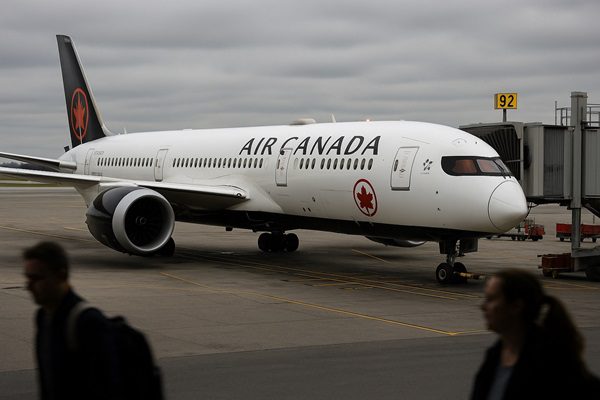
The flag carrier has finally revealed its battered third-quarter performance and revised its full-year guidance. After weeks of suspense, the numbers are in, and they read like the logbook of a pilot navigating unexpected turbulence: lower profits, trimmed growth, and a C$375 million hole punched through the balance sheet by four days of industrial action.
In late August, flight attendants defied orders from the Canadian Industrial Relations Board and left their jobs. The strike grounded more than 3,200 flights, sending Air Canada’s planning department into a tailspin. For a fortnight, management could do little more than shrug and suspend its forecasts, admitting that even the most robust revenue models crumble when half your fleet is sitting sulking on the tarmac.
As arbitration replaces picket lines, the airline has cautiously redrawn its charts for 2025.
The numbers: black ink, but less of it
Air Canada expects to post third-quarter operating income between C$250 million and C$300 million. On paper, that sounds respectable, until you compare it with the C$1.04 billion it earned in the same quarter last year. Adjusted EBITDA, the profit measure airlines cling to when the bottom line starts to wobble, is forecast at C$950 million to C$1 billion, down sharply from C$1.52 billion a year ago.
Chief among the drags is a C$175 million “special item” tied to labour agreements and pension amendments. In plain English: the price of peace.
The airline bluntly admits the strike lopped C$375 million off operating income and EBITDA. Revenue loss from cancelled flights came in at C$430 million, only partially softened by C$145 million in avoided costs like fuel and crew allowances. Add a further C$90 million in reimbursements and strike-related bills, and you can almost hear the accountants sighing into their calculators.
A guidance chart with trimmed wings
The new full-year guidance paints a picture of resilience shaded by caution. Air Canada now sees adjusted EBITDA between C$2.9 and C$3.1 billion, down from its previous C$3.2–C$3.6 billion target. Capacity growth is forecast at a modest 0.5% to 1.5% above 2024 levels, barely a ripple for an airline that once boasted of soaring international expansion.
Costs per available seat mile (CASM) are climbing too, now pegged at 14.60 to 14.70 cents, compared with earlier hopes of 14.25 to 14.50 cents. Free cash flow could fall into negative territory, with projections ranging from C$50 million to +C$150 million.
It’s the financial equivalent of trimming your sails and waiting for the weather to settle.
The human toll
Behind the numbers lies a more awkward truth: trust. Over 60,000 passenger claims have been filed for refunds and compensation. No airline wants to be known for queues at the claims counter, and Air Canada’s management knows full well that reputational repair costs more than jet fuel.
The arbitration now underway prohibits either side from initiating further labour disruptions. That gives management some breathing space, though how much goodwill remains in the crew cabins is another matter.
A tale of two quarters
The irony is that Air Canada entered this storm at a relatively high level. Its second-quarter results, posted in July, showed C$5.63 billion in revenue and a solid C$418 million in operating income. Analysts applauded the momentum, fuelled by international demand and resilient premium traffic. The company even predicted that its core profit in 2025 would exceed expectations.
Then came the strike, an uninvited squall that wiped the smug smile off the balance sheet.
The takes
In old Fleet Street parlance, this is a classic “jam yesterday, jam tomorrow, but no jam today” scenario. Air Canada is desperate to assure investors that the worst is behind it, that arbitration will restore order, and that bookings will rebound once passengers forget the chaos.
But aviation is an unforgiving business. Margins are wafer-thin, fuel prices are volatile, and memories, especially those of inconvenienced travellers, are long. Another labour hiccup and Air Canada’s risks dented profits and frayed public patience.
For now, though, the airline is trying to project stoic calm. The forecasts are back, the bleeding has been accounted for, and the message is simple: turbulence passed. Please return your seatbacks to the upright position.
Why it matters
For investors, the downgrade is a reminder that airlines are always one strike, storm or supply chain hiccup away from turbulence. For customers, it’s reassurance that at least arbitration rules out another wildcat walkout in the immediate term. And for Air Canada, it’s a sobering lesson: running an airline requires fuel and metal, labour peace, and public trust.
The airline insists its long-term trajectory is intact. Yet in the world of aviation, where fortunes can shift faster than a headwind across Hudson Bay, that’s a promise best taken with a seat belt fastened.
By Michelle Warner